Today's
EarthStation1.com 15% (Or More!) Off Commemorative Memorial Title:
Return To Iwo Jima With Ed McMahon DVD, MP4 Download, USB Flash
Drive
Today, September 8, 2026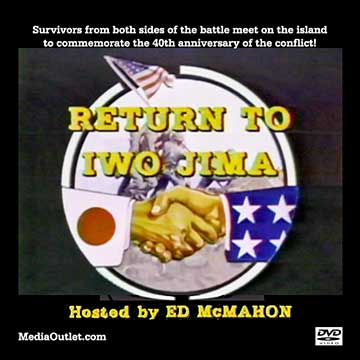
September 8: Pardon Day: -- Human
relationships can become sour from time to time. Grudges are
formed, allegiances are broken. This seems to be an inevitable
occurrence. It also means that with every negative event that may
transpire between us and others, we are also given a chance to
find peace and happiness. Forgiveness is the desire to let go of
negative feelings towards a person who has wronged you. It
involves a change of attitude from the person that has been
wronged and it's an act of goodwill. Forgiveness is one of the
principal teachings of many religions. For example, Judaism views
forgiveness as a pious act, even if the person who was wronged
hasn't received an apology. In Islam, forgiveness is a
prerequisite to find inner peace and is a better course of action
whenever possible. This doesn't mean that it's an easy thing to
do. Forgiving can be a process that takes a very long time and
quite some effort - therefore it often may not happen at all.
Dialogue is always helpful when forgiving is hard to do.
Understanding the reasons why someone wronged you might help pave
the way to an act of reconciliation. The word 'pardon' has some
legal connotations. It's a release from the penalty of an offense
by a higher authority figure. This brings us to the origin of
Pardon Day. On September 8, 1974, President Gerald Ford granted a
very controversial pardon to ex-President Richard Nixon. Nixon had
been involved in one of the most scandalous events in American
history, the Watergate affair. While the day might have a
contentious origin, Pardon Day allows us to reflect upon our
feelings and aim to be more forgiving. On Sale Until Midnight
Tonight PT!
https://store.earthstation1.com/return-to-iwo-jima-ed-mcmahon-dvd-survivors-of-both-sides-meet.html
Today's
EarthStation1.com 15% (Or More!) Off Commemorative Memorial Title:
WWII Films: Combat Medicine And Post War Plans DVD, MP4, USB Drive
Today, September 8, 2026
September 8: World Physical Therapy Day:
-- Celebrated to raise awareness about the critical role of
physical therapists and chronic pain therapies in keeping people
healthy and fit. Physical therapists attempt to treat an injury or
deformity, educate patients about healthy behaviors, and restore
lost or damaged functionality. Chronic pain is linked to a variety
of medical diseases, including low back pain, cervical and
thoracic pain, shoulder pain, headache problems, cancer,
fibromyalgia, muscular dystrophy, and osteoarthritis. The World
Confederation for Physical Therapy (WCPT) established World
Physical Therapy Day on September 8 of each year, in 1996. The
WCPT was created on this date 70 years ago. The day celebrates the
global physical therapy community's togetherness and solidarity.
It is a chance to recognize the contributions that physical
therapists provide to their patients and the community. Going back
in time, the first documented account of physical therapy comes
from Hippocrates, the old master of medicine. Hippocrates
originated the concept of manual manipulation for pain treatment
in 460 B.C. Since then, physiotherapy has progressed from a simple
massage to a complex portfolio of therapies with a wide range of
specialized applications. For centuries, the area of physical
therapy experienced minimal progress. A unified group of physical
therapy practitioners did not emerge until the 18th century. Per
Henrik Ling, known as the 'Father of Swedish Gymnastics,' created
the Royal Central Institute of Gymnastics (RCIG) in 1813 for
massage, manipulation, and exercise. In 1887, Sweden's National
Board of Health and Welfare granted physical therapists official
registration. Until World War II, the majority of physical therapy
was performed in hospitals on patients suffering from surgery,
injuries, or other ailments. During the war, specialty physical
therapy clinics were established to treat the thousands of wounded
soldiers who required rehabilitation following hospital stays.
This shift to outpatient care reflected physical therapy's
expanding popularity. Physiotherapy is now utilized to treat a
wide range of diseases and conditions. Back pain, osteoarthritis,
Alzheimer's disease, Parkinson's disease, bursitis, muscular
strains, Guillain-Barre syndrome, balance disorders, asthma,
fibromyalgia, wounds, burns, rheumatoid arthritis, and a variety
of other illnesses may be treated. The goals of physiotherapy vary
depending on the patient's specific needs, but common intended
outcomes include pain relief, increased range of motion, endurance
and strength, independence, stress reduction, and a higher quality
of life for the patient. The field of physiotherapy evolved even
more as computers became more widespread in the medical realm.
With the advent of the electronics age, made possible by
ever-smaller components, new technologies for use in therapy were
introduced. Electrical stimulators and ultrasounds are two
examples of gadgets that have improved therapeutic effectiveness.
On Sale Until Midnight Tonight PT!
https://store.earthstation1.com/wwii-films-medicine-the-americas-and-post-war-plans-dvd.html
Today's
EarthStation1.com 15% (Or More!) Off Commemorative Memorial Title:
To Be Hamlet TV Documentary Series DVD, Video Download, USB Drive
Today, September 8, 2026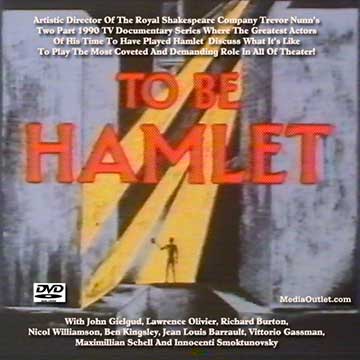
September 8: National Actors' Day: --
Celebrates how actors make us feel when they play our favorite
characters and how they help us appreciate the art form as a
whole. This day is celebrated in the U.S. to honor the actors who
give their talent, time, and energy just to entertain us. It
recognizes not only the big stars, but also the artists who have
portrayed roles in media such as film, T.V., or theater. We
recognize the work of those in this profession, so it's good to
take a day to value their amazing work. Recognizing the work of
these artists can make more of a difference than we may realize.
Acting is said to have originated in Egypt as early as 4000 B.C.
when priests worshiped the memory of the departed. In China,
keeping alive the memory of the victory of the current emperor's
ancestors over its predecessor paved the way for the development
of the first nonreligious acting. In Ancient Greece, the forms of
acting occurred with drama plays. Early actors used a mask to
portray several characters in one play. They made the body express
through mime what the face could not. Meanwhile, the Roman
Empire's theatrical plays were filled with spectacle and
diversity. The Middle Ages, with its season of Catholic influence,
attempted to label acting as a dangerous, immoral, and pagan art
form, which lowered its popularity immensely. The Renaissance
period then brought acting back and transformed it again with
morality plays. This was followed by William Shakespeare in the
1700s, who solidified theater acting in its place. Italy was the
birthplace of modern professional acting in the West during the
early 16th century. Actors invented words and actions to breathe
life into scenarios, teaching actors to collaborate. Even so, the
weight is still on an individual actor's skills and cleverness.
Since then, acting has evolved into a highly respected art form.
Famous actors from all over the world play characters from books,
plays, and scripts, and then convey those characters through
Broadway shows, theater plays, and films. On Sale Until Midnight
Tonight PT!
https://store.earthstation1.com/to-be-hamlet-dvd-2-part-1990-tv-documentary-s21990.html
Today's
EarthStation1.com 15% (Or More!) Off Commemorative Memorial Title:
Classic Baby Boomer Bloopers Video Collection DVD, Download, USB
Drive
Today, September 8, 2026
September 8: Star Trek Day: -- September
8, 1966: Aesthetics: Performing Arts: Premieres: Television
Premieres: United States Television Premieres: -- The landmark
American science fiction television series Star Trek premieres in
the US with its first-aired episode, "The Man Trap". It
aired two days earlier on Canadian network CTV. It later acquired
the retronym of Star Trek: The Original Series (TOS) to
distinguish the show within the media franchise that it began.
People around the world mark Star Trek Day on September 8 to
celebrate the legacy of one of the best stories, films, and T.V.
shows in history. As one of the most beloved works of pop culture,
"Star Trek" still enjoys a loyal fan base even after so
many years. Ever since the release of the first T.V. show in the
series, the "Star Trek" universe kept garnering
attention and wonder at its hope-filled and futuristic vision.
"Star Trek" was initially conceived as a T.V. series
about the cosmos. The first episode was aired in 1966, on
September 8, the date of the holiday. Although the ratings of this
first series kept dropping throughout the season, later
installations proved much more successful. The show was canceled
after some years. However, in 1969, reruns of the show helped
garner a cult following. The first "Star Trek"
convention was organized in 1972, which was attended by thousands
of fans, surprisingly. This attested to the success of the show
and the originality of its premise, which later led to the
network, Paramount, reviving the series. Paramount produced the
"Star Trek" animated series, which won an Emmy Award, as
well as The Motion Picture, which performed fairly well at the box
office. The first major success of the Star Trek saga would be
"Star Trek II: The Wrath of Khan," the second film in
the series. Star Trek would eventually amass six film productions,
all of which are now considered classics. Later on, in 1987,
Paramount would reintroduce the Star Trek universe back into
television, with the production of "Star Trek: The Next
Generation." As of the 2000s, "Star Trek" is by far
the most successful franchise for Paramount, and will continue to
release additional installations to the original work. Even now,
several "Star Trek"-themed T.V. shows, animated series,
and movies are still in production. This cultural significance is
what makes "Star Trek" deserving of a dedicated annual
celebration. On Sale Until Midnight Tonight PT!
https://store.earthstation1.com/classic-baby-boomer-bloopers-tv-amp-movie-blooper-outtakes-dvd.html
Today's
EarthStation1.com 15% (Or More!) Off Commemorative Memorial Title:
TV Commercials: The Cable Age Classics III DVD, Download, USB
Drive
Today, September 8, 2026
September 8: International Literacy Day:
-- A day to raise awareness and concern for literacy problems that
exist within our own local communities as well as globally.
International Literacy Day was founded by proclamation of The
United Nations Educational, Scientific and Cultural Organization,
or UNESCO, in 1966 "to remind the public of the importance of
literacy as a matter of dignity and human rights."
International Literacy Day brings ownership of the challenges of
illiteracy back home to local communities where literacy begins,
one person at a time. Although much progress has been made in
improving literacy rates in the more than fifty years since the
first International Literacy Day, illiteracy remains a global
problem. There are thought to be more than 750 million adults
around the world who cannot read. The scourge of Illiteracy spares
no nation or culture on earth, including the United States, where
an estimated 32 million American adults are illiterate. What
exactly is literacy? Miriam-Webster Dictionary defines literacy as
"the quality or state of being literate: educated_able to
read and write." Because you are able to read this post and
no doubt spend a lot of time reading online, it may seem
incredulous to learn there are people living and working in your
own community who not only cannot read this post, but are unable
to read a book, a restaurant menu, a road sign, a voting ballot,
an instruction manual, a prescription bottle label, or a cereal
box. Can you imagine navigating modern-day life without the basic
ability to read and write? Wiping out illiteracy in every local
community around the world is what International Literacy Day is
all about. International Literacy Day was first conceived at the
"World Conference of Ministers of Education on the
Eradication of Illiteracy" held in Tehran, Iran in 1965. The
following year UNESCO took the lead and declared September 8 as
International Literacy Day, with the primary purpose being "_to
remind the international community of the importance of literacy
for individuals, communities and societies, and the need for
intensified efforts towards more literate societies." One
year later, the global community accepted the challenge of ending
illiteracy by participating in the first International Literacy
Day. On Sale Until Midnight Tonight PT!
https://store.earthstation1.com/tv-commercials-the-cable-age-classics-iii-dvd.html
Today's
EarthStation1.com 15% Off Commemorative Memorial Title: The Mongol
Hordes: Storm From The East TV Series DVD MP4 USB Drive
Today, September 8, 2026
September 8, 1380: The Mongols: The
Mongol Empire: Mongol Invasions And Conquests: The Golden Horde
(Kipchak Turkic: Ulug Ulus "The Great State"): Mongol
Invasions Of The Metropolis Of Kiev And All Rus': The Great
Troubles (Church Slavonic: Velikaya Zamyatnya) (The Golden Horde
Dynastic War): The Battle Of Kulikovo ([Russian: Kulikovskaya
Bitva, Bitva Na Kulikovom]) (The Battle Of Mamaev [Russian:
Mamayevo Poboishche], The Battle Of The Don [Russian: Donskoye
Poboishche]): -- Russian forces of various principalities under
the united command of Prince Dmitry Of Moscow defeat a mixed army
of Tatars and Mongols of the Golden Horde under the command of
Mamai at the Kulikovo Field near the Don River (now Tula Oblast,
Russia), stopping the Mongol advance and earning Dmitry the title
Dmitry Donskoy, "Dmitry Of The Don". Although the
victory did not end Mongol domination over Rus, it was the turning
point of Mongol influence over Russia and the beginning of
Moscow's rise to power. The process eventually led to the
independence of The Grand Duchy Of Moscow and the formation of the
modern Russian state. The Rus' victory at Kulikovo is commemorated
today in Russia as a Russian Day Of Military Honour on September
21. On Sale Until Midnight Tonight PT!
https://store.earthstation1.com/the-mongol-hordes-storm-from-the-east-tv-series-dvd-mp4-usb-driv4.html
Today's
EarthStation1.com 15% Off Commemorative Memorial Title: Napoleon
(1955) Raymond Pellagrin Orson Welles DVD, Download, USB
Today, September 8, 2026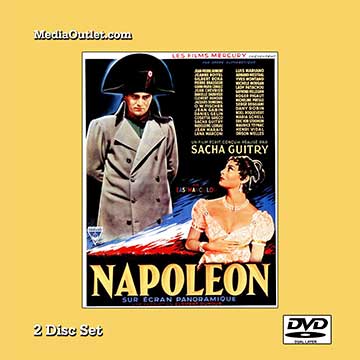
September 8: Russian Day Of Military
Honour: -- The Napoleonic Wars: The French Invasion Of Russia: The
Day Of The Battle Of Borodino: The Age Of Enlightenment (The
Enlightenment, The Age Of Reason): The Age Of Revolution: The
Atlantic Revolutions: The French Revolution: The French
Revolutionary And Napoleonic Wars (The Great French War) (The
French Revolutionary Wars, The Napoleonic Wars): The Napoleonic
Wars: The French Invasion Of Russia: The Battle Of Borodino: -- In
honor of the Russian victory of the day prior during the bloodiest
battle of the Napoleonic Wars, fought near the village of
Borodino, Russia near Moscow, a Day Of Military Honor is observed,
special memorable dates in the Russian Armed Forces dedicated to
the most outstanding victories won by Russia. Some of these dates
are state holidays but the majority of them is celebrated purely
in the military. The Battle Of Borodino (Russian: Borodinskoye
Srazheniye; French: Bataille de la Moskova (Battle Of The Moskova
River) involved around 250,000 troops and left at least 70,000
casualties, making Borodino the deadliest day of the Napoleonic
Wars. Napoleon's Grande Armee launched an attack against the
Russian army, driving it back from its initial positions but
failing to gain a decisive victory. Both armies were exhausted
after the battle and the Russians withdrew from the field the
following day. Borodino represented the last Russian effort at
stopping the French advance on Moscow, which fell a week later.
However, the French had no clear way of forcing Tsar Alexander to
capitulate because the Russian army was not decisively defeated,
resulting in the ultimate defeat of the French invasion following
the retreat from Moscow in October. After a series of Russian
retreats at the beginning of the campaign, the nobility grew
alarmed about the advancing French troops and forced the Tsar to
dismiss the army's commander, Barclay de Tolly. Prince Mikhail
Kutuzov was appointed as his replacement. In a final attempt to
save Moscow, the Russians made a stand near the village of
Borodino, west of the town of Mozhaysk. They fortified their
positions and waited for the French to attack. The Russian right
wing occupied ideal defensive terrain, so the French tried to
press the Russian left for much of the battle. The highlight of
the fighting became the bloody struggle for the large Raevsky
redoubt near the village of Borodino. The French managed to
capture this redoubt late into the day, gradually forcing the rest
of the Russian army to pull back as well. The Russians suffered
terrible casualties during the fighting, losing over a third of
their army. French losses were also heavy, exacerbating the
logistical difficulties that Napoleon encountered in the campaign.
The exhaustion of the French forces, and the lack of information
on the condition of the Russian army, persuaded Napoleon to remain
on the battlefield with his army instead of ordering the kind of
vigorous pursuit reminiscent of previous campaigns. Napoleon's
Imperial Guard, the only unit on the battlefield that saw no
fighting, was available to swing into action at a moment's notice.
In refusing to commit the Guard, some historians believe, he lost
his one chance to destroy the Russian army and to win the
campaign. The capture of Moscow proved a pyrrhic victory, since
the Russians had no intention of negotiating with Napoleon for
peace. The French evacuated Russia's spiritual capital in October
and conducted a difficult retreat that lasted until December, by
which point the remainder of the Grande Armee had largely
unraveled. Historical reports of the battle differed significantly
depending on whether they originated from supporters of the French
or Russian side. Factional fighting among senior officers within
each army also led to conflicting accounts and disagreements over
the roles of particular officers. Pyotr Ilyich Tchaikovsky
composed his 1812 Overture to commemorate the battle. The overture
debuted in Moscow on August 20, 1882, conducted by Ippolit Al'tani
under a tent near the then-unfinished Cathedral Of Christ The
Saviour, which also memorialized the 1812 defence of Russia. The
overture was conducted by Tchaikovsky himself in 1891 at the
dedication of Carnegie Hall, in what was one of the first times a
major European composer visited the United States. It has also
become a common accompaniment to fireworks displays on the United
States' Independence Day. The 1812 Overture went on to become one
of Tchaikovsky's most popular works. On Sale Until Midnight
Tonight PT!
https://store.earthstation1.com/napoleon-1955-dvd-raymond-pellagrin-orson-welles-2-19552.html
Today's
EarthStation1.com 15% Off Commemorative Memorial Title: Leningrad:
The Hero City Documentary On WWII DVD, Download, USB Drive
Today, September 8, 2026
September 8, 1941: The European Civil
War: World War II: The Second European War (The European Theater
Of World War II): The Eastern Front Of World War II: The Great
Patriotic War (The German-Soviet War): xSeptember 8, 1941: The
European Civil War: World War II: The Second European War (The
European Theater Of World War II): The Eastern Front Of World War
II: The Great Patriotic War (The German-Soviet War): The Siege Of
Leningrad (The 900-Day Siege) (Russian: Blokada Leningrada;
German: Leningrader Blockade; Finnish: Leningradin Piiritys,
Italian: Assedio Di Leningrado; Spanish: Asedio De Leningrado): --
One of the longest and most destructive sieges in history, and
possibly the costliest siege in history due to the number of
casualties which were suffered throughout its duration, begins as
Germany's Army Group North, having advanced from the south, begins
The Siege Of Leningrad when they severe the last road to the city,
the start of a prolonged military siege undertaken by the Axis
powers against the Soviet city of Leningrad (present-day Saint
Petersburg). The German-allied Finnish army then invaded from the
north and completed the ring around the city. Although Soviet
forces managed to open a narrow land corridor to the city on
January 18, 1943, the Red Army did not lift the siege unti
Januaryl 27, 1944, 872 days (125 weeks) after it began. By the
time the seige was lifted, an estimated 1.5 million people died as
a result of the siege. At that time, it was not classified as a
war crime; however, in the 21st century, some historians have
classified it as a genocide, due to the intentional destruction of
the city and the systematic starvation of its civilian population.
On Sale Until Midnight Tonight PT!
https://store.earthstation1.com/leningrad-the-hero-city-dvd-cities-at-war-wwii-russia.html
Today's
EarthStation1.com 15% Off Commemorative Memorial Title:
Michelangelo Documentaries DVD, MP4 Video Download, USB Flash
Drive
Today, September 8, 2026
September 8, 1504: Aesthetics: Art: Art
History: The Visual Arts: Sculpture: Renaissance: Renaissance
Sculpture: The High Renaissance: High Renaissance Sculpture:
Italian Renaissance: Italian Renaissance Sculpture: Michelangelo:
The Sculptures Of Michelangelo: Masterpieces: Michelangelo's
David: -- Michelangelo's David, a masterpiece of Renaissance
sculpture created in marble, which he began in 1501, is unveiled
in Piazza Della Signoria in Florence, Italy. David is a 5.17-metre
(17.0 ft) marble statue of the Biblical figure David, a favoured
subject in the art of Florence. David was originally commissioned
as one of a series of statues of prophets to be positioned along
the roofline of the east end of Florence Cathedral, but was
instead placed in a public square, outside the Palazzo Vecchio,
the seat of civic government in Florence, in the Piazza Della
Signoria, where it was unveiled on September 8, 1504. The statue
was moved to the Galleria dell'Accademia, Florence, in 1873, and
later replaced at the original location by a replica. Because of
the nature of the figure it represented, the statue soon came to
symbolize the defence of civil liberties embodied in the Republic
of Florence, an independent city-state threatened on all sides by
more powerful rival states and by the hegemony of the Medici
family. The eyes of David, with a warning glare, were fixated
towards Rome. On Sale Until Midnight Tonight PT!
https://store.earthstation1.com/michelangelo-documentaries-dvd-mp4-video-download-usb-driv4.html
Today's
EarthStation1.com 15% Off Commemorative Memorial Title: Joshua
Lawrence Chamberlain American Civil War Hero DVD MP4 USB Drive
Today, September 8, 2026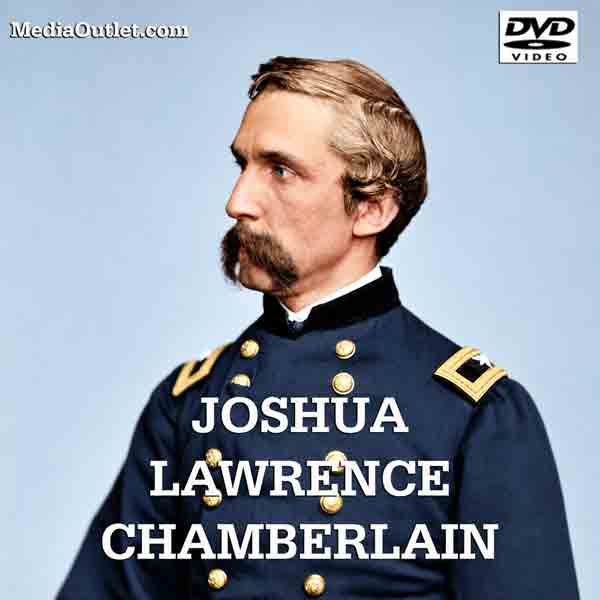
September 8, 1828: #BOTD: #HBD! Joshua
Chamberlain, American college professor from Maine who volunteered
during the American Civil War to join the Union Army, became a
highly respected and decorated Union officer, reaching the rank of
brigadier general (and brevet major general), best known for his
gallantry at the Battle Of Gettysburg, for which he was awarded
the Medal Of Honor (d. February 24, 1914) is #born Lawrence Joshua
Chamberlain in Brewer, Maine. Following the war, Joshua Lawrence
Chamberlain served as Governor of Maine, and the President of
Bowdoin College. Chamberlain was commissioned a lieutenant colonel
in the 20th Maine Volunteer Infantry Regiment in 1862 and fought
at the Battle of Fredericksburg. He became commander of the
regiment in June 1863 when losses at Chancellorsville elevated
Colonel Ames to Brigade Command and Chamberlain was left in charge
of the regiment. On July 2, during the Battle Of Gettysburg,
Chamberlain's regiment occupied the extreme left of the Union
lines at Little Round Top. Chamberlain's men withstood repeated
assaults from the 15th Regiment Alabama Infantry and finally drove
the Confederates away with a downhill bayonet charge. Chamberlain
was severely wounded while commanding a brigade during the Second
Battle of Petersburg in June 1864, and was given what was intended
to be a deathbed promotion to brigadier general. In April 1865, he
fought at the Battle of Five Forks and was given the honor of
commanding the Union troops at the surrender ceremony for the
infantry of Robert E. Lee's Army at Appomattox Court House,
Virginia. After the war, he entered politics as a Republican and
served four one-year terms of office as the 32nd Governor of
Maine. He served on the faculty, and as president, of his alma
mater, Bowdoin College. He died in Portland, Maine at age 85 due
to complications from the wound that he received during the Second
Battle of Petersburg. He is buried at Pine Grove Cemetery in
Brunswick, Maine. On Sale Until Midnight Tonight PT!
https://store.earthstation1.com/joshua-lawrence-chamberlain-american-civil-war-hero-dvd-mp4-usb-driv4.html
Today's
EarthStation1.com 15% Off Commemorative Memorial Title: The Last
Voyage Of The Morro Castle Naval Disaster DVD, MP4, USB Stick
Today, September 8, 2026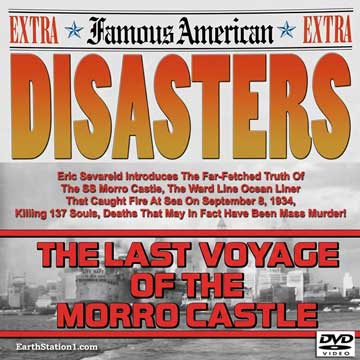
September 8, 1934: Maritime Incidents:
Maritime Disasters: Maritime Incidents In United States Waters:
Maritime Disasters In United States Waters: Passenger Ship
Incidents In United States Waters: Passenger Ship Disasters In
United States Waters: Ocean Liners Incidents In United States
Waters: Ocean Liners Disasters In United States Waters: The SS
Morro Castle Fire: -- #DOTD: #RIP: A fire aboard the passenger
liner SS Morro Castle kills 137 people off the New Jersey coast.
SS Morro Castle was an ocean liner of the 1930s that was built for
the Ward Line for voyages between New York City and Havana, Cuba.
The ship was named for the Morro Castle fortress that guards the
entrance to Havana Bay. On the morning of September 8, 1934, en
route from Havana to New York, the ship caught fire and burned,
killing 137 passengers and crew members. The ship eventually
beached herself near Asbury Park, New Jersey, and remained there
for several months until she was towed off and scrapped. The
devastating fire aboard the Morro Castle was a catalyst for
improved shipboard fire safety. Today, the use of fire-retardant
materials, automatic fire doors, ship-wide fire alarms, and
greater attention to fire drills and procedures resulted directly
from the Morro Castle disaster. Officially, the fire's cause was
never determined. In the mid-1980s, a dramatization of the fire
entitled "The Mystery of the Morro Castle" starring John
Goodman in his first television role as Radio Officer George
Rogers, blamed Rogers for causing the fire. On Sale Until Midnight
Tonight PT!
https://store.earthstation1.com/the-last-voyage-of-the-morro-castle-dvd-mp4-usb-flash-driv4.html
Today's
EarthStation1.com 15% Off Commemorative Memorial Title: Huey Long
Aka The Kingfish Documentaries DVD, Download, USB Drive
Today, September 8, 2026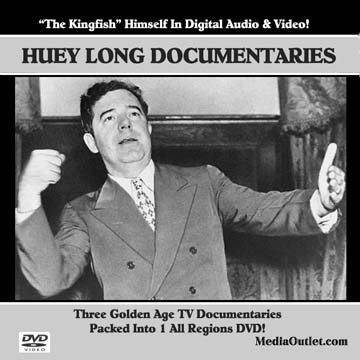
September 8, 1935: The Interwar Period
(The Interbellum, Between The Wars): The Great Depression: The
Great Depression In The United States: Huey Long: The
Assassination Of Huey Long: -- Huey Long, 40th governor of
Louisiana from 1928 to 1932, United States senator from 1932 until
his assassination in 1935, is shot and mortally wounded while
attending a session of the state House of Representatives in Baton
Rouge, Louisiana. He died two days later. Huey Pierce Long Jr.
(August 30, 1893: September 10, 1935), self-nicknamed The
Kingfish, was an American politician who served as the 40th
governor of Louisiana from 1928 to 1932 and as a member of the
United States Senate from 1932 until his death by assassination in
1935. A Democrat, he was an outspoken populist who denounced the
wealthy and the banks and called for a "Share Our Wealth"
program. As the political leader of the state, he commanded wide
networks of supporters and was willing to take forceful action. He
established the long-term political prominence of the Long family.
A supporter of Franklin D. Roosevelt in the 1932 presidential
election, Long split with Roosevelt in June 1933 to plan his own
presidential bid for 1936 in alliance with the influential
Catholic priest and radio commentator Charles Coughlin. After Long
was assassinated, his legacy continued in Louisiana through his
wife, Senator Rose McConnell Long; his son, Senator Russell B.
Long, and his brothers, Earl Kemp Long and George S. Long, as well
as several other more distant relatives. Under Long's leadership,
hospitals and educational institutions were expanded, a system of
charity hospitals was set up that provided health care for the
poor, massive highway construction and free bridges brought an end
to rural isolation, and textbooks, bought with tax monies rather
than individually by parents, were provided to schoolchildren. He
remains a controversial figure in Louisiana history, with critics
and supporters debating whether he could have potentially become a
dictator or was a demagogue. On Sale Until Midnight Tonight PT!
https://store.earthstation1.com/huey-long-dvd-3939the-kingfish3939-docum39393939.html
Today's
EarthStation1.com 15% Off Commemorative Memorial Title: Benito
Mussolini Documentaries DVD, MP4 Video Download, USB Drive
Today, September 8, 2026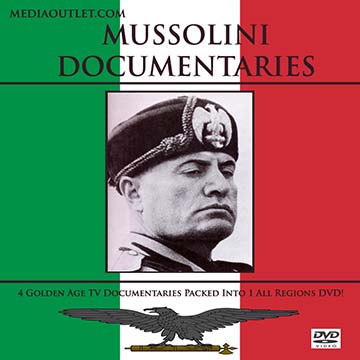
September 8, 1943: The European Civil
War: World War II: The Second European War (The European Theater
Of World War II): The Mediterranean And Middle East Theater Of
World War II (The Mediterranean Theater Of War) The Italian
Campaign Of World War II (The Liberation Of Italy): The Italian
Civil War (Italian: Guerra Civile Italiana): -- The Italian Civil
War begins, part of the Italian Campaign of World War II, in
reaction to The Armistice Of Cassibile which was signed on
September 3, 1943 by Walter Bedell Smith and Giuseppe Castellano
that stipulated the surrender of Italy to the Allies. The Italian
Resistance and the Italian Co-Belligerent Army joined the allies
fighting Axis forces, including the fight against the continuing
the Italian fascist puppet state of the Italian Social Republic
(RSI); that regime dissolved, and Benito Mussolini tried to
escape, but was captured and summarily executed. The Italian Civil
War ended on May 2, 1945, when the Nazi occupation of Italy ended
as the Nazi occupation army surrenders and left Northern Italy
after a general partisan insurrection by Italian resistance
movement The National Liberation Committee For Northern Italy (The
Committee Of National Liberation For Northern Italy) against the
German occupation and the puppet fascist Italian Social Republic
(RSI). On Sale Until Midnight Tonight PT!
https://store.earthstation1.com/benito-mussolini-dvd-wwii-documentaries.html
Today's
EarthStation1.com 15% Off Commemorative Memorial Title: Hitler's
Secret Weapons: V-1 And V-2 Rocket Bombs DVD, Download, USB
Today, September 8, 2026
September 8, 1944: The European Civil
War: World War II: The Second European War (The European Theater
Of World War II): The Western Front Of World War II: Science And
Technology During World War II: Science And Technology In Nazi
Germany: Research And Development In Nazi Germany (R & D In
Nazi Germany): Wunderwaffen (German: "Wonder Weapons",
"Miracle Weapons"); V-Weapons (German:
Vergeltungswaffen, "Vengeance Weapons", "Retaliatory
Weapons", "Reprisal Weapons"): The V-2 (The V-2
Rocket, German: Vergeltungswaffe 2, "Vengeance Weapon 2";
Aggregat 4, German: "Aggregate 4", A-4): -- London is
hit by a V-2 rocket for the first time, launched from one of
launching sites set up by the Germans around The Hague in the
Netherlands only two days prior. The V-2 (German: Vergeltungswaffe
2, "Retribution Weapon 2"), technical name Aggregat 4
(A4; German: Agreggate 4), was the world's first long-range guided
ballistic missile. The missile, powered by a liquid-propellant
rocket engine, was developed during the Second World War in
Germany as a "vengeance weapon", assigned to attack
Allied cities as retaliation for the Allied bombings against
German cities. The V-2 rocket also became the first man-made
object to travel into space by crossing the Karman line (an
altitude of 100 km (62 mi; 330,000 ft) above Earth's sea level)
with the vertical launch of MW 18014 on 20 June 1944. Research
into military use of long range rockets began when the studies of
graduate student Wernher von Braun attracted the attention of the
German Army. A series of prototypes culminated in the A-4, which
went to war as the V-2. Beginning in September 1944, over 3,000
V-2s were launched by the German Wehrmacht against Allied targets,
first London and later Antwerp and Liege. The attacks from V2s
resulted in the deaths of an estimated 9,000 civilians and
military personnel, and a further 12,000 forced laborers and
concentration camp prisoners died as a result of their forced
participation in the production of the weapons. As Germany
collapsed, teams from the Allied forces-the United States, the
United Kingdom, and the Soviet Union-raced to capture key German
manufacturing sites and technology. Wernher von Braun and over 100
key V-2 personnel surrendered to the Americans. Eventually, many
of the original V-2 team ended up working at the Redstone Arsenal.
The US also captured enough V-2 hardware to build approximately 80
of the missiles. The Soviets gained possession of the V-2
manufacturing facilities after the war, re-established V-2
production, and moved it to the Soviet Union. On Sale Until
Midnight Tonight PT!
https://store.earthstation1.com/hitler39s-secret-weapons-dvd-v1-and-v2-rocket-robot-b3912.html
Today's
EarthStation1.com 15% Off Commemorative Memorial Title: Richard
Nixon Reflects With Morton Kondracke DVD, Download, USB Drive
Today, September 8, 2026
September 8, 1974: Scandals: Political
Scandals: Political Scandals Of The United States: Richard Nixon:
The Presidency Of Richard Nixon: The Watergate Scandal: Gerald
Ford: The Presidency Of Gerald Ford: Presidential Proclamations:
Presidential Proclamations Of The United States: Proclamation 4311
(The Pardon Of Richard Nixon): -- A month after Richard Nixon
resigned the presidency in disgrace as a result of the Watergate
scandal, his successor, the former Vice President and current
President Gerald R. Ford issues a presidential proclamation,
formally known as Proclamation 4311, granting Nixon a full and
unconditional pardon for any crimes that he might have committed
while in office against the United States as president. In
particular, the pardon covered Nixon's actions during the
Watergate scandal. In a televised broadcast to the nation, Ford,
who had succeeded to the presidency upon Nixon's resignation,
explained that he felt the pardon was in the best interests of the
country and that the Nixon family's situation was "a tragedy
in which we all have played a part. It could go on and on and on,
or someone must write the end to it. I have concluded that only I
can do that, and if I can, I must." After Ford left the White
House in 1977, he privately justified his pardon of Nixon by
carrying in his wallet a portion of the text of Burdick v. United
States, a 1915 U.S. Supreme Court decision that suggested that a
pardon carries an imputation of guilt and that its acceptance
carries a confession of guilt. Effective at noon August 9, 1974,
Richard M. Nixon had resigned the presidency as a result of the
Watergate Scandal. The evening prior, Richard Nixon's Resignation
Speech was delivered in an Oval Office address made nationwide on
television and radio, announcing to the American public his
resignation from the office of the President of the United States
effective noon the next day. The purpose of the speech was for
Nixon, who had been intimately involved in the events surrounding
the Watergate scandal that occurred during his controversial
re-election campaign in 1972, to announce to the nation that he
was resigning from office. Watergate had cost Nixon much of his
political support, and at the time of his resignation, he faced
almost certain impeachment and removal from office. Nixon was the
ninth incumbent president not to complete the four-year term to
which they had been elected since the presidency was established
in 1789. He was however, the first to do so for a reason other
than dying in office. His presidential resignation remains the
only one in U.S. history. On Sale Until Midnight Tonight PT!
https://store.earthstation1.com/richard-nixon-reflects-dvd-morton-kondracke-interview.html
Today's
EarthStation1.com 15% Off Commemorative Memorial Title: CIA The
Secret Files The Central Intelligence Agency TV Series MP4 DVD
Today, September 8, 2026
September 8, 1978: The Aftermath Of World
War II: The Cold War: The Cold War (1962-1979): The Iranian
Revolution: Black Friday (1978) (Persion: Jom'e-Ye Siyah): --
Imperial State of Iran soldiers massacre protesters in Tehran's
Jaleh Square, resulting in 700-3000 dead and 205-8,000 injured.
The massacre marks the beginning of the end of the Shah's rule and
of Pahlavi dynasty monarchy in Iran, ending any hope for
compromise between the protest movement and regime of Shah
Mohammad Reza Pahlavi. As protests against the Shah's rule
continued during the spring and the summer of 1978, the Iranian
government declared martial law. On September 8, 1978, thousands
gathered in Tehran's Jaleh Square for a religious demonstration,
unaware that the government had declared martial law a day
earlier. Surrounded by the army, the gathering was shot at
indiscriminately. The massacre became the point of no return for
the revolution, triggering protests that continued for another
four months, and it led to the abolition of Iran's monarchy less
than a year later. It is also believed that Black Friday played a
crucial role in further radicalizing the protest movement, uniting
the opposition to the Shah and mobilized the masses. Initially,
opposition and western journalists claimed that the Iranian army
had massacred thousands of protesters. The Muslim clerical
opposition leadership, however, claimed "thousands have been
massacred by Zionist troops". A general strike in October
shut down the petroleum industry that was essential to the
administration's survival, "sealing the Shah's fate".
The continuation of protests ultimately led to Shah leaving Iran
in January 1979, clearing the way for the Iranian Revolution, led
by Ayatollah Ruhollah Khomeini. The square's name was later
changed to the Square of Martyrs (Maidan-e Shohada) by the Islamic
republic. On Sale Until Midnight Tonight PT!
https://store.earthstation1.com/cia-the-secret-files-the-central-intelligence-agency-tv-series-mp4-dv4.html
Today's
EarthStation1.com 15% Off Commemorative Memorial Title: Civil Jets
The Boeing 707 C135 Stratolifter KC135 Tanker DVD, MP4, USB
Today, September 8, 2026
September 8, 1994: Aviation: The History
Of Aviation: The History Of Civil Aviation: Aviation Incidents And
Accidents: USAir Flight 427: -- On approach to Pittsburgh
International Airport, USAir Flight 427 suddenly crashes in clear
weather killing all 132 aboard, the deadliest air disaster in
Pennsylvania's history; resulting in the most extensive aviation
investigation in world history and altering manufacturing
practices in the industry. USAir Flight 427 was a scheduled flight
from Chicago's O'Hare International Airport to Palm Beach
International Airport, Florida, with a stopover at Pittsburgh
International Airport. On a Thursday, the Boeing 737 Classic
narrow-body airliner developed from the Boeing 707 fuselage flying
this route crashed in Hopewell Township, Pennsylvania while
approaching Runway 28R at Pittsburgh, which was USAir's largest
hub at the time. After the longest investigation in the history of
the National Transportation Safety Board (NTSB), it was determined
that the probable cause was that the aircraft's rudder
malfunctioned and went hard over in a direction opposite to that
commanded by the pilots, causing the plane to enter an aerodynamic
stall from which the pilot Captain Peter Germano and First Officer
Charles B. Emmet III were unable to recover. On Sale Until
Midnight Tonight PT!
https://store.earthstation1.com/civil-jets-the-boeing-707-c135-stratolifter-kc135-t707135135.html
Today's
EarthStation1.com 15% (Or More!) Off Commemorative Memorial Title:
Vietnam War & AFVN Radio MP3 Set MPG & JPG Set CD,
Download, USB Drive
Today, September 8, 2026
(#JCKaelin here: Adrian Cronauer was a
customer of ours who provided legal advice from time to time. We
surely miss him!) ========= September 8, 1938: #BOTD: #HBD! Adrian
Cronauer, United States Air Force Airman 1st Class and radio
personality whose experiences as an innovative disc jockey on
American Forces Network during the Vietnam War inspired the 1987
film Good Morning, Vietnam (d. July 18, 2018) is #born. Adrian
Joseph Cronauer was a fan of the EarthStation1 website and
corresponded with us about the site in the early 2000s. He was
born and raised in Pittsburgh, Pennsylvania. He began his
broadcasting career at the age of 12 as a guest for a
Pittsburgh-area children's amateur hour. He attended the
University of Pittsburgh, where he helped found the forerunner of
the university's college radio station WPTS-FM. Cronauer chose to
enlist instead of waiting on the draft in the early 1960s. After
deliberating about entering flight training (which entailed a
longer service commitment), Cronauer chose broadcasting and media
operations, ultimately becoming a U.S. Air Force Radio and
Television Broadcasting Specialist. His service spanned the years
from 1963 to 1967. He eventually rose to the rank of Airman First
Class. While Cronauer is most known for his service in Vietnam, he
was previously stationed at Iraklion Air Station, Crete, Greece.
In the late 1970s, while working as the classical morning host at
WVWR in Roanoke, Virginia (now Virginia Tech's WVTF), Cronauer had
an idea for a television sitcom that would be a blend of M*A*S*H
and WKRP in Cincinnati, two popular TV series of that era. It was
not until some years later that he was able to elicit interest in
the proposal which became the film Good Morning, Vietnam. The
movie was based on his experiences as a Saigon-based DJ during the
Vietnam War, where he served from 1965 to 1966. His program was
known as the Dawn Buster. According to Cronauer, other than the
film's portrayal of him being a radio host, very little of the
film reflects his experiences, except the bombing of a restaurant
which Cronauer witnessed first-hand from nearby. A subsequent
special program on National Public Radio about the role of the
American Forces Vietnam Network (AFVN-military radio and
television) earned Cronauer a 1992 Ohio State Award and two 1991
Gold Medals from the New York Radio Festival. He earned a master's
degree in Media Studies from the New School for Social Research in
New York City and a Juris Doctor degree from the University of
Pennsylvania. Cronauer's law practice concentrated in information
and communications law. Cronauer consented to disbarment in the
District Of Columbia in October 2014 for reportedly misleading
consumers through misrepresentations and deceptive and fraudulent
loan modification and foreclosure prevention practices. Later he
worked as a special assistant to the director of the Defense
Prisoner of War/Missing Personnel Office. Cronauer was a member of
Mensa and a "lifelong card-carrying Republican", having
taken an "active role" in both Bob Dole's 1996
unsuccessful presidential campaign and George W. Bush's 2004
successful presidential reelection campaign. Cronauer died on July
18, 2018, at his home in Western Virginia at the age of 79. He is
buried at Southwest Virginia Veterans Cemetery in Dublin,
Virginia. At the time of his death, Cronauer lived in Troutville,
Virginia. He was married to Jeane Cronauer (nee Steppe), who died
in 2016. She had a son by a previous marriage, Michael Muse.
Cronauer was a member of Mensa. On Sale Until Midnight Tonight PT!
https://store.earthstation1.com/vietnam-war-cdrom-mp3s-mpgs-jpgs-cdro3.html
Today's
EarthStation1.com 15% (Or More!) Off Commemorative Memorial Title:
Walt Disney: The Story Of Robin Hood (1956) DVD, Download, USB
Drive
Today, September 8, 2026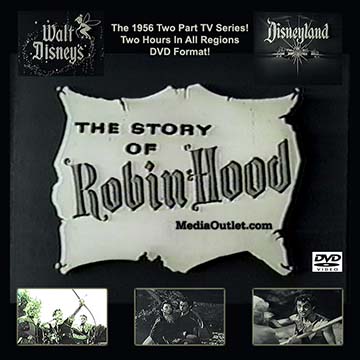
September 8, 1157: #BOTD: #HBD! Richard
I, also known as Richard Coeur De Lion (French: Richard The
Lionheart) and as Good King Richard in fiction and film in tales
of Robin Hood, Third Crusade military chief and troubadour (d.
April 6, 1199) is #born Richard Plantagenet-Angevin in Beaumont
Palace, Oxford, England, the third of five sons of King Henry II
Of England and Duchess Eleanor Of Aquitaine. He was King Of
England from July 6, 1189 until his death; he also ruled as Duke
of Normandy, Aquitaine and Gascony, Lord of Cyprus, Count of
Poitiers, Anjou, Maine, and Nantes, and was overlord of Brittany
at various times during the same period. He was known as Richard
Coeur De Lion or Richard The Lionheart because of his reputation
as a great military leader and warrior. He was also known in the
troubadourr language of Occitan as Oc e No (Yes and No), because
of his reputation for terseness. By the age of 16, Richard had
taken command of his own army, putting down rebellions in Poitou
against his father. Richard was a central Christian commander
during the Third Crusade, leading the campaign after the departure
of Philip II of France and scoring considerable victories against
his Muslim counterpart, Saladin, although he did not retake
Jerusalem from Saladin. Richard spoke both French and Occitan as
well as English, having been born in England, where he spent his
childhood; before becoming king, however, he lived most of his
adult life in the Duchy of Aquitaine, in the southwest of France.
Following his accession, he spent very little time, perhaps as
little as six months, in England. Most of his life as king was
spent on Crusade, in captivity, or actively defending his lands in
France. Rather than regarding his kingdom as a responsibility
requiring his presence as ruler, he has been perceived as
preferring to use it merely as a source of revenue to support his
armies. Nevertheless, he was seen as a pious hero by his subjects.
He remains one of the few kings of England remembered by his
epithet, rather than regnal number, and is an enduring iconic
figure both in England and in France. Richard I died from an
infection following the removal of an arrow from his shoulder that
had been shot by a crossbow bolt on March 25. The wound swiftly
became gangrenous. Richard asked to have the crossbowman brought
before him; called alternatively Pierre (or Peter) Basile, John
Sabroz, Dudo, and Bertrand de Gourdon (from the town of Gourdon)
by chroniclers, the man turned out (according to some sources, but
not all) to be a boy. He said Richard had killed his father and
two brothers, and that he had killed Richard in revenge. He
expected to be executed, but as a final act of mercy Richard
forgave him, saying "Live on, and by my bounty behold the
light of day", before he ordered the boy to be freed and sent
away with 100 shillings. It is unclear whether the King's pardon
was upheld following his death; according to one chronicler,
Richard's last act of chivalry proved fruitless when the infamous
mercenary captain Mercadier had the boy flayed alive and hanged as
soon as Richard died in the arms of his mother, Duchess Eleanor Of
Aquitaine, in Chalus, Aquitaine, aged 41. Because of the nature of
his death, it was later said that "the Lion by the Ant was
slain". Richard's heart was buried at Rouen in Normandy, his
entrails in Chalus (where he died), and the rest of his body at
the feet of his father at Fontevraud Abbey in Anjou. In 2012,
scientists analysed the remains of Richard's heart and found that
it had been embalmed with various substances, including
frankincense, a symbolically important substance because it had
been present both at the birth and embalming of Christ. Henry
Sandford, Bishop of Rochester (1226-1235), announced that he had
seen a vision of Richard ascending to Heaven in March 1232 (along
with Stephen Langton, the former archbishop of Canterbury), the
King having presumably spent 33 years in purgatory as expiation
for his sins. Richard produced no legitimate heirs and
acknowledged only one illegitimate son, Philip of Cognac. He was
succeeded by his brother John as king[ His French territories,
with the exception of Rouen, initially rejected John as a
successor, preferring his nephew Arthur. The lack of any direct
heirs from Richard was the first step in the dissolution of the
Angevin Empire. On Sale Until Midnight Tonight PT!
https://store.earthstation1.com/walt-disney39s-disneyland-the-story-of-robin-hood-1956-391956.html
Today's
EarthStation1.com 15% (Or More!) Off Commemorative Memorial Title:
The Great War (1964) TV Documentary Series DVD, Video Download,
USB
Today, September 8, 2026
September 8, 1916: The European Civil
War: World War I: The First European War (The European Theater Of
World War I): The African Theatre Of World War I: The East African
Campaign Of World War I: The Tabora Offensive (April-September,
1916) The Battle Of Tabora (French: Bataille De Tabora) (September
8-19, 1916): -- The Battle of Tabora begins, a military action
which occurred around the town of Tabora in the north-west of
German East Africa (modern-day Tanzania), part of the East Africa
Campaign and the culmination of the Tabora Offensive in which a
Belgian force from the Belgian Congo crossed the border and
captured the settlement of Kigoma and Tabora (the largest town in
the interior of the German colony), pushing the German colonial
army back. The southern brigade commanded by Colonel Frederik
Valdemar Olsen advanced to Tabora following the Tanganyika Railway
(Tanganjikabahn), which the Germans destroyed as they withdrew to
the east. Tabora was an open plain surrounded by hills, which
German Maj. Gen. Wahle had used to build his defences. The
southern brigade took control of the German railway station at
Usoke on 30 August, in response Wahle sent reinforcements from
Tabora to Usoke by train. The German Schutztruppen launched the
counterattack on Usoke from 2 to 3 September, which was repelled
by the Force Publique. On the 7th, General Wahle launched another
counterattack on the train station of Usoke, this time a naval gun
was mounted on one of the railway wagons. Both sides suffered
heavy losses, the train station was bombarded, the Force publique
launched an attack, and the Germans were pushed back. When the
last resistance in Usoke (west of Tabora) was broken, the Belgians
advanced to reach the German defences of Tabora at Lulanguru on 8
September. The southern brigade led the offensive actions for the
next 4 days, closing in on Tabora from the west. Wahle established
his main positions at Itaga, north of Tabora. From 10-12 September
the northern brigade encountered heavy German resistance in the
hills of Itaga, where they suffered considerable casualties. By
this time Wahle's forces were reduced to 1.100 rifles and the
desertion of his askari soldiers multiplied. On September 16, the
Germans intercepted a letter from Crewe for colonel Molitor
(Brigade Nord), which stated that the main offensive from the
north was planned for the 19th. After heavy fighting, the German
army retreated to the southeast, in three columns. The civilian
authorities of Tabora surrendered to the troops of the Force
Publique on September 19. The Belgians liberated around 200 Allied
prisoners of war (mainly Belgians and British) and 228 German
soldiers were captured. The Force Publique lost 1,300 soldiers. On
3 October, after the Allies had established control of the African
Great Lakes region, Lake Force was disbanded. Wahle, in
anticipation of an Allied pursuit, was retreating at a rapid pace
to Mahenge and found himself in unexplored and uninhabited
terrain, with no water and food at his disposal. The victory not
only left much of the Ruanda-Urundi territory under Belgian
military occupation but gave the Allies control of the important
Tanganjikabahn railway. On Sale Until Midnight Tonight PT!
https://store.earthstation1.com/the-great-war-dvd-set-1964-wwi-tv-series-26-shows-1964266.html
Today's
EarthStation1.com 15% (Or More!) Off Commemorative Memorial Title:
Between The Wars TV Documentary Series DVD, Video Download, USB
Drive
Today, September 8, 2026
September 8, 1926: The Aftermath Of World
War I: The Interwar Period (The Interbellum, Between The Wars):
The Weimar Republic (The German Reich, The German Republic): The
League Of Nations: The Admission Of Germany To The League Of
Nations: -- The League of Nations passes a resolution admitting
Germany to the League Of Nations, the result of German Minister
For Foreign Affairs Gustav Stresemann reaching an understanding
with France that secured Germany an equal position in the League,
marking Germany's reintegration into the international community.
Nevertheless, especially on the political right, there remained
strong and widespread resentment against the treaty and those who
had signed and supported it. This opposition ultimately resulted
in Nazi Germany, angry and steeling herself to any consequences,
announcing on October 14, 1933 its withdrawal from the League as
well as the World Disarmament Conference, disingenuously declaring
its willingness to destroy her last machine gun and demobilize her
last soldier if other nations would do likewise. President Paul
Von Hindenburg at once decreed the dissolution of the Reichstag
and proclaimed a new general parliamentary election for November
12, 1933 to obtain the nation's approval of these governmental
decisions. The moment the news of the intention to withdraw
reached the city, crowds began turning out frenziedly into the
Unter Den Linden, Berlin's principal boulevard. Patriotic
demonstrations were organized spontaneously. Marchers formed into
the ranks familiar in the World War, and Nazi brass bands turned
out to lead parades of Hitler youths. Chancellor Adolf Hitler, in
a proclamation to the people, said: "The government asks the
nation: Does the nation agree with this policy of its government?
Is the nation ready solemnly to indorse it as its own opinion and
its own will?" The 1933 German League Of Nations Withdrawal
Referendum of November 12, 1933 was approved by 95% of voters with
a turnout of 96%. On Sale Until Midnight Tonight PT!
https://store.earthstation1.com/between-the-wars-dvd-set-all-16-tv-shows-4-discs164.html
Today's
EarthStation1.com 15% (Or More!) Off Commemorative Memorial Title:
Korea: The Unknown War TV Korean War Series DVD, Download, USB
Drive
Today, September 8, 2026
September 8, 1945: Korea: The History Of
Korea: The Aftermath Of World War II: The Cold War: The Cold War
In Asia: The Korean Conflict: The Division Of Korea: The United
States Army Military Government In Korea (USAMGIK): -- In response
to Soviet troops occupying the northern part of the Korean
Peninsula a month earlier, American Lieutenant General John R.
Hodge lands with his troops at the port of Incheon to partition
and occupy the southern part of Korea, marking the beginning of
the United States Army Military Government In Korea. With the
American government fearing Soviet expansion, and Japanese
authorities in Korea warning of a power vacuum, General Douglas
MacArthur, as Supreme Commander For The Allied Powers (SCAP), who
was simultaneous to being in charge of Japan also in charge of
southern Korea in the aftermath of The Pacific War, issued on
September 7, 1945 Proclamation No. 1 to the people of Korea,
announcing U.S. military control over Korea south of the 38th
parallel, and establishing English as the official language during
military control. That same day, MacArthur announced that General
Hodge was to administer Korean affairs. USAMGIK was from the
moment Hodges landed the official ruling body of the southern half
of the Korean Peninsula until August 15, 1948. At that time, Korea
was plagued with political and economic chaos, which arose from a
variety of causes. The after-effects of the Japanese occupation
were still being felt in the occupation zone, as well as in the
Soviet zone in the north. Popular discontent stemmed from the
United States' military government's support of the Japanese
colonial government; then once removed, keeping the former
Japanese governors on as advisors; by ignoring, censoring, and
forcibly disbanding the functional and popular People's Republic
of Korea (PRK); and finally by supporting United Nations elections
that divided the country. The U.S. administration refused to
recognize the Provisional Government of the Republic of Korea,
despite the South Korean government considering it their
predecessor since 1987. In addition, the U.S. military was largely
unprepared for the challenge of administering the country,
arriving with no knowledge of the language or political situation.
Thus, many of their policies had unintended, destabilizing
effects. Waves of refugees from North Korea (estimated at 400,000)
and returnees from abroad caused further turmoil. The Division Of
Korea began on August 15, 1945 when the official announcement of
the surrender of Japan was released, thus ending the Pacific
Theater of World War II. During the war, the Allied leaders had
already been considering the question of Korea's future following
Japan's eventual surrender in the war. The leaders reached an
understanding that Korea would be liberated from Japan but would
be placed under an international trusteeship until the Koreans
would be deemed ready for self-rule. In the last days of the war,
the United States proposed dividing the Korean peninsula into two
occupation zones (a U.S. and Soviet one) with the 38th parallel as
the dividing line. The Soviets accepted their proposal and agreed
to divide Korea, not knowing that at the time of the
Russo-Japanese War that secret negotiations between Russia and
Japan had suggested the same 38th parallel dividing line for their
own occupation of Korea; Dean Rusk, one of the two officers
responsible for dividing the two Koreas along that parallel, later
said "Had we had known that, we would have suggested any
other dividing line." It was understood that this division
was only a temporary arrangement until the trusteeship could be
implemented. In December 1945, the Moscow Conference of Foreign
Ministers resulted in an agreement on a five-year, four-power
Korean trusteeship. However, with the onset of the Cold War and
other factors both international and domestic, including Korean
opposition to the trusteeship, negotiations between the United
States and the Soviet Union over the next two years regarding the
implementation of the trusteeship failed, thus effectively
nullifying the only agreed-upon framework for the re-establishment
of an independent and unified Korean state. With this, the Korean
question was referred to the United Nations. In 1948, after the UN
failed to produce an outcome acceptable to the Soviet Union,
UN-supervised elections were held in the US-occupied south only.
Syngman Rhee won the election, while Kim Il Sung consolidated his
position as the leader of Soviet-occupied northern Korea. This led
to the establishment of the Republic of Korea in southern Korea on
15 August 1948, promptly followed by the establishment of the
Democratic People's Republic of Korea in northern Korea on 9
September 1948. The United States supported the South, the Soviet
Union supported the North, and each government claimed sovereignty
over the whole Korean peninsula. On 25 June 1950, North Korea
invaded South Korea in an attempt to re-unify the peninsula under
its communist rule. The subsequent Korean War, which lasted from
1950 to 1953, ended with a stalemate and has left Korea divided by
the Korean Demilitarized Zone (DMZ) up to the present day. On Sale
Until Midnight Tonight PT!
https://store.earthstation1.com/korea-the-unknown-war-dvd-complete-6-part-tv-series-3-dis63.html
Today's
EarthStation1.com 15% (Or More!) Off Commemorative Memorial Title:
Japan: A Cherry Blossom By Many Other Names MP4 Video Download DVD
Today, September 8, 2026
September 8, 1951: The Pacific Theater Of
World War II): The Treaty of San Francisco (Japanese:
San-Furanshisuko Kowa-Joyaku) (The Treaty Of Peace With Japan
[Japanese: Nihon-Koku To No Heiwa-Joyaku], The Peace Treaty Of San
Francisco [Japanese: Sanfuranshisuko Heiwa-Joyaku]) (The Treaty Of
San Francisco, The Peace Treaty With Japan, The Treaty Of Peace
With Japan, The Peace Treaty Of San Francisco, The San Francisco
Peace Treaty): The History Of Broadcasting: The History Of
Television Broadcasting: Television Broadcasting Firsts:
Transcontinental Broadcasting: Transcontinental Television
Broadcasting: -- 48 nations sign The Peace Treaty Of San Francisco
with Japan in formal recognition of the end of the Pacific War. It
was mostly a treaty between Japan and the Allied Powers. According
to Article 11 of the Treaty, Japan accepts the judgments of the
International Military Tribunal for the Far East and of other
Allied War Crimes Courts imposed on Japan both within and outside
Japan. This treaty served to officially end Japan' position as an
imperial power, to allocate compensation to Allied civilians and
former prisoners of war who had suffered Japanese war crimes
during World War II, and to end the Allied post-war occupation of
Japan and return sovereignty to that nation. This treaty made
extensive use of the United Nations Charter and the Universal
Declaration of Human Rights to enunciate the Allies' goals. On
September 4, 1951, the first live transcontinental television
broadcasts began in San Francisco, providing nationwide coverage
of the Japanese Peace Treaty Conference. On Sale Until Midnight
Tonight PT!
https://store.earthstation1.com/japan-a-cherry-blossom-by-many-other-names-mp4-video-download-dvd.html
Today's
EarthStation1.com 15% (Or More!) Off Commemorative Memorial Title:
Crusade In Europe WWII TV Series DVD, Video Download, USB Flash
Drive
Today, September 8, 2026
September 8, 1943: The European Civil
War: World War II: The Second European War (The European Theater
Of World War II): The Mediterranean And Middle East Theater Of
World War II (The Mediterranean Theater Of War) The Italian
Campaign Of World War II (The Liberation Of Italy): The Allied
Invasion Of Italy: The Armistice Of Cassibile (Italian: Armistizio
Di Cassibile) (The Italian Instrument Of Surrender): -- United
States General Dwight D. Eisenhower publicly announces the Allied
armistice with Italy, the Armistice Of Cassibile, that Eisenhower
and Italian Marshal Pietro Badoglio signed aboard the Royal Navy
battleship HMS Nelson off Malta on September 3, 1943, on the same
day as the Allied Invasion Of Italy began, the Allied amphibious
landing on mainland Italy that took place during the early stages
of the Italian Campaign of World War II. On Sale Until Midnight
Tonight PT!
https://store.earthstation1.com/crusade-in-europe-2-dual-layer-dvds-tv-series-eisenhowe2.html
Today's
EarthStation1.com 15% (Or More!) Off Commemorative Memorial Title:
The Yellowstone Fires Of 1988 Documentary DVD, Download, USB Drive
Today, September 8, 2026
September 8, 1988: Natural Disasters:
Natural Disasters In The United States: Fires: Conflagrations:
Conflagrations In The United States: Wildfires (Forest Fires,
Bushfires, Brushfires, Wildland Fires, Rural Fires): The
Yellowstone Fires Of 1988: -- All of Yellowstone National Park is
closed to all non-emergency personnel for the first time in its
history. On September 5-7, 1988, a dry front pushed flames along
the southern section of The North Fork Fire, the largest fire in
Yellowstone National Parkm towards the large Old Faithful visitor
complex adjacent to the Upper Geyser Basin. All non-emergency
personnel were ordered to be evacuated; however, political issues
influenced National Park Service management directives and the
complex was not completely closed to incoming tourists, with some
visitors still arriving at Old Faithful not long before the
intense fire hit by mid afternoon. An all out aerial bombardment
with air tankers dropping fire retardant failed. Firefighters
concentrated on structure protection, especially those of
historical significance such as the Old Faithful Inn, using fire
engines and portable water pumping systems to keep the roofs and
other surfaces of the structures wet. 1,200 firefighters including
120 military personnel dug fire lines and cleared away brush near
structures. Winds crested up to 80 miles per hour (130 km/h) as
the fire approached from the west. The fires spread to forested
sections near to, but generally away from, major structures, but
19 small structures were destroyed and there was also extensive
damage to an old dormitory. The fire was so intense that vehicles
left near the fire had their wheels melted, windshields shattered
and paint scorched. Though most of the Old Faithful complex had
been spared, the park service decided that for the first time, the
entire park would be closed to non-emergency personnel on
September 8. The Yellowstone Fires Of 1988 collectively formed the
largest wildfire in the recorded history of Yellowstone National
Park in the United States. Starting as many smaller individual
fires, the flames quickly spread out of control due to drought
conditions and increasing winds, combining into one large
conflagration which burned for several months. The fires almost
destroyed two major visitor destinations and, on September 8,
1988, the entire park closed to all non-emergency personnel for
the first time in its history. Only the arrival of cool and moist
weather in the late autumn brought the fires to an end. A total of
793,880 acres (3,213 km2), or 36 percent of the park, was affected
by the wildfires. Thousands of firefighters fought the fires,
assisted by dozens of helicopters and fixed-wing aircraft which
were used for water and fire retardant drops. At the peak of the
effort, more than 9,000 firefighters were assigned to the park.
With fires raging throughout the Greater Yellowstone Ecosystem and
other areas in the western United States, the staffing levels of
the National Park Service and other land management agencies were
inadequate for the situation; more than 4,000 U.S. military
personnel were soon brought in to assist in wildfire suppression
efforts. The firefighting effort cost 120M USD (260M USD in 2020).
Losses to structures were minimized by concentrating firefighting
efforts near major visitor areas, keeping property damage down to
3M USD (6M USD as of 2020). No firefighters died while fighting
the Yellowstone fires, though there were two fire-related deaths
outside the park. Before the late 1960s, fires were generally
believed to be detrimental for parks and forests, and management
policies were aimed at suppressing fires as quickly as possible.
However, as the beneficial ecological role of fire became better
understood in the decades before 1988, a policy was adopted of
allowing natural fires to burn under controlled conditions, which
proved highly successful in reducing the area lost annually to
wildfires. In contrast, in 1988, Yellowstone was overdue for a
large fire, and, in the exceptionally dry summer, many smaller
"controlled" fires combined. The fires burned
discontinuously, leaping from one patch to another, leaving
intervening areas untouched. Intense fires swept through some
regions, burning everything in their paths. Tens of millions of
trees and countless plants were killed by the wildfires, and some
regions were left looking blackened and dead. However, more than
half of the affected areas were burned by ground fires, which did
less damage to hardier tree species. Not long after the fires
ended, plant and tree species quickly reestablished themselves,
and native plant regeneration has been highly successful. The
Yellowstone Fires Of 1988 were unprecedented in the history of the
National Park Service, and led to many questions about existing
fire management policies. Media accounts of mismanagement were
often sensational and inaccurate, sometimes wrongly reporting or
implying that most of the park was being destroyed. While there
were temporary declines in air quality during the fires, no
adverse long-term health effects have been recorded in the
ecosystem and, contrary to initial reports, few large mammals were
killed by the fires, though there was a subsequent reduction in
the number of moose which has yet to rebound. On Sale Until
Midnight Tonight PT!
https://store.earthstation1.com/the-yellowstone-fires-of-1988-documentary1988.html
Today's
EarthStation1.com 15% (Or More!) Off Commemorative Memorial Title:
The Shadow Of Jack The Ripper Documentary DVD, Download, USB Drive
Today, September 8, 2026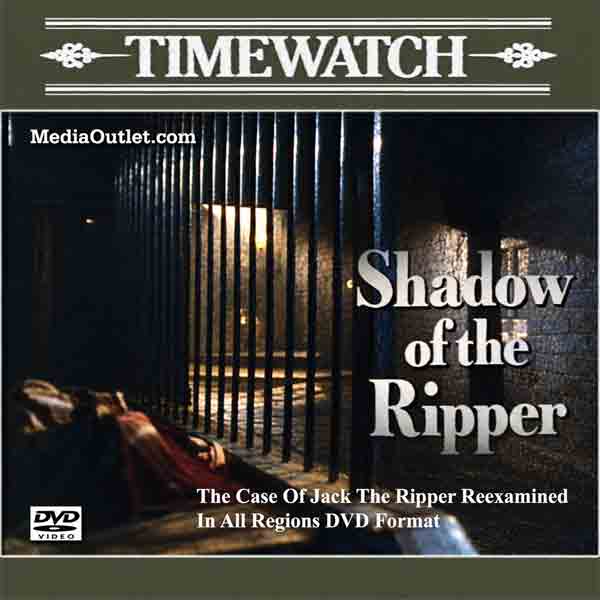
September 8, 1888: Crime: Crime In The
United Kingdom: Murder: Serial Murders: The Whitechapel Murders
(The Jack The Ripper Murders, The Leather Apron Murders): --
#DOTD: #RIP: The body of Jack The Ripper's second murder victim in
London, England is found after Annie Chapman #dies. Witness Mrs.
Elizabeth Long saw Chapman talking to a man at about 5:30 a.m.
just beyond the back yard of 29 Hanbury Street, Spitalfields. Mrs.
Long described him as over forty, and a little taller than the
five-foot-tall Chapman, with dark hair, and of foreign,
"shabby-genteel" appearance. He was wearing a
deer-stalker hat and dark overcoat. If correct in her
identification of Chapman, it is likely that Long was the last
person to see Chapman alive besides her murderer. Chapman's body
was discovered at just before 6:00 a.m. on the morning of
September 8, 1888 by a resident of number 29, market porter John
Davis. She was lying on the ground near a doorway in the back
yard. Chapman is known as one of the "canonical five"
victims of the Whitechapel murders of Jack The Ripper between 31
August and 9 November 1888. Jack The Ripper is the best-known name
for an unidentified serial killer generally believed to have been
active in the largely impoverished areas in and around the
Whitechapel district of London in 1888. In both the criminal case
files and contemporary journalistic accounts, the killer was
called the Whitechapel Murderer and Leather Apron. Attacks
ascribed to Jack The Ripper typically involved female prostitutes
who lived and worked in the slums of the East End of London whose
throats were cut prior to abdominal mutilations. The removal of
internal organs from at least three of the victims led to
proposals that their killer had some anatomical or surgical
knowledge. Rumours that the murders were connected intensified in
September and October 1888, and letters were received by media
outlets and Scotland Yard from a writer or writers purporting to
be the murderer. The name "Jack The Ripper" originated
in a letter written by someone claiming to be the murderer that
was disseminated in the media. The letter is widely believed to
have been a hoax and may have been written by journalists in an
attempt to heighten interest in the story and increase their
newspapers' circulation. The "From Hell" letter received
by George Lusk of the Whitechapel Vigilance Committee came with
half of a preserved human kidney, purportedly taken from one of
the victims. The public came increasingly to believe in a single
serial killer known as "Jack The Ripper", mainly because
of the extraordinarily brutal nature of the murders, and because
of media treatment of the events. Extensive newspaper coverage
bestowed widespread and enduring international notoriety on the
Ripper, and the legend solidified. A police investigation into a
series of eleven brutal killings in Whitechapel up to 1891 was
unable to connect all the killings conclusively to the murders of
1888. Five victims-Mary Ann Nichols, Annie Chapman, Elizabeth
Stride, Catherine Eddowes, and Mary Jane Kelly-are known as the
"canonical five" and their murders between 31 August and
9 November 1888 are often considered the most likely to be linked.
The murders were never solved, and the legends surrounding them
became a combination of genuine historical research, folklore, and
pseudohistory. The term "ripperology" was coined to
describe the study and analysis of the Ripper cases. There are now
over one hundred hypotheses about the Ripper's identity, and the
murders have inspired many works of fiction. On Sale Until
Midnight Tonight PT!
https://store.earthstation1.com/timewatch-shadow-of-jack-the-ripper-dvd.html
Today's
EarthStation1.com 15% (Or More!) Off Commemorative Memorial Title:
Portraits Of The Presidency: POTUS Documentaries DVD, Download,
USB
Today, September 8, 2026
September 8, 1889: #BOTD: #HBD! Robert A.
Taft, American conservative politician, lawyer, senator and
soldier, son of U.S. President and 10th Chief Justice of the U.S.
William Howard Taft (d. July 31, 1953) is #born Robert Alphonso
Taft in Cincinnati, Ohio, a product of one of America's most
prominent political families. He was a grandson of Attorney
General and Secretary of War Alphonso Taft, and the elder son of
President and Chief Justice William Howard Taft and Helen Louise
"Nellie" Herron. His younger brother Charles Phelps Taft
II served as the Mayor of Cincinnati and was the unsuccessful
Republican candidate for Ohio Governor in 1952. As a boy Taft
spent four years in the Philippines, where his father was
Governor-General. He was first in his class at the Taft School
(run by his uncle), at Yale College (1910), and at Harvard Law
School (1913). He was a member of Psi Upsilon, his father's
fraternity and Skull and Bones, and edited the Harvard Law Review.
In 1913, Taft scored the highest in the state on the Ohio bar
exam. He then practiced for four years with the firm of Maxwell
and Ramsey (now Graydon Head & Ritchey LLP) in Cincinnati, his
family's ancestral city. After a two-year stint in Washington
working for the Food and Drug Administration, he returned to
Cincinnati and opened his own law office. In 1924, he and his
brother Charles helped form the law partnership Taft Stettinius &
Hollister, with which Taft continued to be associated until his
death and continues to carry his name today. A member of the
Republican Party, Robert Alphonso Taft Sr. represented Ohio in the
United States Senate and briefly served as Senate Majority Leader.
The elder son of William Howard Taft, the 27th President of the
United States, Robert Taft was born in Cincinnati, Ohio. He
pursued a legal career in Cincinnati after graduating from Harvard
Law School in 1913. Along with his brother, Charles Phelps Taft
II, he co-founded the law partnership of Taft Stettinius And
Hollister. Taft served in the Ohio House of Representatives from
1921 to 1931 and in the Ohio Senate from 1931 to 1933. Though he
lost re-election in 1932, he remained a powerful force in state
and local politics. Taft won election to the United States Senate
in 1938, defeating incumbent Democrat Robert J. Bulkley. He became
a leader of the conservative coalition of Republicans and
conservative Democrats who successfully opposed expansion of the
New Deal after 1938. He also emerged as a prominent
non-interventionist and opposed U.S. involvement into World War II
prior to the Japanese Attack on Pearl Harbor. After the war, he
opposed the creation of NATO and criticized President Harry
Truman's handling of the Korean War. He also cosponsored the Labor
Management Relations Act of 1947, which banned closed shops and
other labor practices. After winning election to the Senate, Taft
repeatedly sought the Republican presidential nomination, often
battling for control of the party with the moderate faction of
Republicans led by Thomas E. Dewey. Taft's non-interventionist
stances damaged his 1940 candidacy, and the 1940 Republican
National Convention nominated Wendell Willkie. Taft sought the
presidency again in 1948, but he lost to Dewey at the 1948
Republican National Convention. Taft sought the presidential
nomination a third time in 1952 and was widely viewed as the
frontrunner. However, Dewey and other moderates convinced General
Dwight D. Eisenhower to enter the race, and Eisenhower narrowly
prevailed at the 1952 Republican National Convention and went on
to win the 1952 presidential election. Taft was elected Senate
Majority Leader in 1953 but died of of a brain hemorrhage caused
by metastasized pancreatic cancer, after being elected Senate
Majority Leader earlier that year. His body lay in state at the
United States Capitol rotunda, where thousands of mourners offered
their respects at his coffin. On August 3, 1953, a memorial
service was held in the rotunda; in addition to his family the
service was attended by Eisenhower, Vice President Nixon, the
cabinet, members of the Supreme Court, and Taft's congressional
colleagues. Following the service his body was flown to
Cincinnati, where he was buried in a private ceremony at Indian
Hill Episcopal Church Cemetery. In 1957, a committee led by
Senator John F. Kennedy selected Taft as one of the five greatest
senators -- along with Henry Clay, Daniel Webster, John C.
Calhoun, and Robert M. La Follette Sr. -- whose portraits would
adorn the President's Room off the Senate floor. Kennedy would
feature him in Profiles in Courage, and Taft continues to be
regarded by historians as one of the most powerful senators of the
20th century. On Sale Until Midnight Tonight PT!
https://store.earthstation1.com/portraits-of-the-presidency-roosevelt-wilson-hoover-taft-willkie.html
Today's
EarthStation1.com 15% (Or More!) Off Commemorative Memorial Title:
Ten From Your Show Of Shows - Sid Caesar TV Series DVD, Download,
USB
Today, September 8, 2026
September 8, 1922: #BOTD: #HBD! Sid
Caesar, American comic actor and writer (d. February 12, 2014) is
#born in Yonkers, New York to Jewish immigrants most likely from
Dabrowa Tarnowska, Poland, father Max Ziser (1874-1946) and mother
was Ida (nee Raphael) (1887-1975). Reports state that the surname
"Caesar" was given to Max as a child by an immigration
official at Ellis Island; according to Marian L. Smith, senior
historian of the U.S. Citizenship and Immigration Service, there
is no known case of a name changed at Ellis Island; despite this
claim, many immigrant families declare that claim to be false;
accordingly, Sid Caesar's legal name in America, Isaac Sidney
Caesar, is likely derived from what would have been his correct
name, Isaac Sidney Ziser. Sid Caesar was best known for two
pioneering 1950s live television series: Your Show of Shows, which
was a 90-minute weekly show watched by 60 million people, and its
successor, Caesar' Hour, both of which influenced later
generations of comedians. Your Show of Shows and its cast received
seven Emmy nominations between the years 1953 and 1954 and tallied
two wins. He also acted in movies; he played Coach Calhoun in
Grease (1978) and its sequel Grease 2 (1982) and appeared in the
films It' a Mad, Mad, Mad, Mad World (1963), Silent Movie (1976),
History of the World, Part I (1981), and Cannonball Run II (1984).
Sid Caesar died at his home in Beverly Hills, California, at the
age of 91, after a short undisclosed illness. On Caesar's death,
Carl Reiner said, "He was the ultimate, he was the very best
sketch artist and comedian that ever existed." Mel Brooks
commented, "Sid Caesar was a giant, maybe the best comedian
who ever practiced the trade. And I was privileged to be one of
his writers and one of his friends." Woody Allen stated, "He
was one of the truly great comedians of my time". Jon Stewart
and The Daily Show paid tribute to Caesar at the show's close on
February 12, 2014. Vanity Fair republished a brief tribute written
by Billy Crystal in August 2005, in which he said he wondered if
he would have been a comedian had it not seen Sid Caesar. He is
interned at Mount Sinai Memorial Park Cemetery. On Sale Until
Midnight Tonight PT!
https://store.earthstation1.com/ten-from-your-show-of-shows-tv-show-movie-dvd.html
Today's
EarthStation1.com 15% (Or More!) Off Commemorative Memorial Title:
After The Fox (1966) Peter Sellers Victor Mature DVD MP4 USB Drive
Today, September 8, 2026
September 8, 1925: #BOTD: #HBD! Peter
Sellers, CBE, English film actor, comedian and singer (d. July 24,
1980) is #born Richard Henry Sellers in Portsmouth, England. He
performed in the BBC Radio comedy series The Goon Show, featured
on a number of hit comic songs and became known to a worldwide
audience through his many film characterisations, among them Chief
Inspector Clouseau in The Pink Panther series of films. Sellers
made his stage debut at the Kings Theatre, Southsea, when he was
two weeks old. He began accompanying his parents in a variety act
that toured the provincial theatres. He first worked as a drummer
and toured around England as a member of the Entertainments
National Service Association (ENSA). He developed his mimicry and
improvisational skills during a spell in Ralph Reader's wartime
Gang Show entertainment troupe, which toured Britain and the Far
East. After the war, Sellers made his radio debut in ShowTime, and
eventually became a regular performer on various BBC radio shows.
During the early 1950s, Sellers, along with Spike Milligan, Harry
Secombe and Michael Bentine, took part in the successful radio
series The Goon Show, which ended in 1960. Sellers began his film
career during the 1950s. Although the bulk of his work was
comedic, often parodying characters of authority such as military
officers or policemen, he also performed in other film genres and
roles. Films demonstrating his artistic range include I'm All
Right Jack (1959), Stanley Kubrick's Lolita (1962) and Dr.
Strangelove (1964), What's New, Pussycat? (1965), Casino Royale
(1967), The Party (1968), Being There (1979) and five films of the
Pink Panther series (1963-78). Sellers's versatility enabled him
to portray a wide range of comic characters using different
accents and guises, and he would often assume multiple roles
within the same film, frequently with contrasting temperaments and
styles. Satire and black humour were major features of many of his
films, and his performances had a strong influence on a number of
later comedians. Sellers was nominated three times for an Academy
Award, twice for the Academy Award for Best Actor, for his
performances in Dr. Strangelove and Being There, and once for the
Academy Award for Best Live Action Short Film for The Running
Jumping and Standing Still Film (1959). He won the BAFTA Award for
Best Actor in a Leading Role twice, for I'm All Right Jack and for
the original Pink Panther film, The Pink Panther (1963) and was
nominated as Best Actor three times. In 1980 he won the Golden
Globe Award for Best Actor - Motion Picture Musical or Comedy for
his role in Being There, and was previously nominated three times
in the same category. Turner Classic Movies calls Sellers "one
of the most accomplished comic actors of the late 20th century."
In his personal life, Sellers struggled with depression and
insecurities. An enigmatic figure, he often claimed to have no
identity outside the roles that he played. His behaviour was often
erratic and compulsive, and he frequently clashed with his
directors and co-stars, especially in the mid-1970s when his
physical and mental health, together with his alcohol and drug
problems, were at their worst. Sellers was married four times, and
had three children from his first two marriages. He died just
after midnight as a result of a heart attack in London, England,
aged 54. His remains were cremated at Golders Green Crematorium,
where his ashes are buried under a rosebush, plot #39802. The
rosebed is located at the far end of the crematorium complex, next
to The Chapel Of Memory columbarium. Following Sellers' death,
fellow actor Richard Attenborough said that Sellers "had the
genius comparable to Chaplin", while the Boulting brothers
considered Sellers as "a man of enormous gifts; and these
gifts he gave to the world. For them, he is assured of a place in
the history of art as entertainment." Burt Kwouk, who
appeared as Cato in the Pink Panther films, stated that "Peter
was a well-loved actor in Britain ... the day he died, it seemed
that the whole country came to a stop. Everywhere you went, the
fact that Peter had died seemed like an umbrella over everything".
Director Blake Edwards thought that "Peter was brilliant. He
had an enormous facility for finding really unusual, unique facets
of the character he was playing". Sellers' friend and Goon
Show colleague Spike Milligan was too upset to speak to the press
at the time of Sellers' death, while fellow Goon Harry Secombe
said "I'm shattered. Peter was such a tremendous artist. He
had so much talent, it just oozed out of him"; in dark
humour, referring to the missed dinner the Goons had planned, he
added, "Anything to avoid paying for dinner". Secombe
later declared to journalists "Bluebottle is deaded now".
Milligan later said that "it's hard to say this, but he died
at the right time." A private funeral service was held at
Golders Green Crematorium on 26 July, conducted by Sellers' old
friend, Canon John Hester. Sellers' final joke was the playing of
"In the Mood" by Glenn Miller, a tune which all the
Goons hated; he knew they would have to sit there in silence and
listen to it. A memorial service was held at St
Martin-In-The-Fields on September 8, 1980 -- what would have been
Sellers' 55th birthday. Close friend Lord Snowdon read the
twenty-third Psalm, Harry Secombe sang "Bread Of Heaven"
and the eulogy was read by David Niven. Although Sellers was
reportedly in the process of excluding Frederick from his will a
week before he died, she inherited almost his entire estate worth
an estimated 4.5M PS (24.4M USD in 2023 pounds) while his children
received 800PS each (4,333PS in 2023). Spike Milligan appealed to
her on behalf of Sellers' three children, but she refused to
increase the amount. Sellers' only son, Michael, died of a heart
attack at 52 during surgery in 2006, twenty-six years to the day
after his father's death. On Sale Until Midnight Tonight PT!
https://store.earthstation1.com/after-the-fox-dvd-1966-peter-sellers-victor-matur1966.html
Today's
EarthStation1.com 15% (Or More!) Off Commemorative Memorial Title:
6 Volume Goon Show Audio/Video MegaSet DVD, MP4 Download, USB
Drive
Today, September 8, 2026
September 8, 1921: #BOTD: #HBD! Harry
Secombe, Welsh-English comedian, singer and actor who played
Neddie Seagoon, a central character in the BBC radio comedy series
The Goon Show (d. April 11, 2001) is #born Harry Donald Secombe in
St Thomas, Swansea, Wales. Sir Harry Donald Secombe, CBE also
played many other characters on the show as well. An accomplished
tenor, he also appeared in musicals and films - notably as Mr
Bumble in Oliver! (1968) - and, in his later years, was a
presenter of television shows incorporating hymns and other
devotional songs. Harry Secombe died at the age of 79 from
prostate cancer in hospital in Guildford, Surrey, England. He was
cremated, and his ashes are interred at the parish church of
Shamley Green, and a later memorial service to celebrate his life
was held at Westminster Abbey on October 26, 2001. As well as
family members and friends, the service was also attended by
Charles, Prince Of Wales and representatives of Prince Philip,
Duke of Edinburgh, Anne, Princess Royal, Princess Margaret,
Countess of Snowdon and Prince Edward, Duke of Kent. On his
tombstone is the inscription: "To know him was to love him."
At Peter Sellers's funeral in 1980, Secombe sang a hymn; Spike
Milligan joked: "I hope you die before me because I don't
want you singing at my funeral." After Milligan's death in
2002, a recording of Secombe singing "Guide me, O Thou Great
Redeemer" was played at Milligan's memorial service. The
Secombe Theatre in Sutton, Greater London, was named after him. He
is also fondly remembered at the London Welsh Centre, where he
opened the bar on St Patrick's Day, March 17, 1971. On Sale Until
Midnight Tonight PT!
https://store.earthstation1.com/6-disc-goon-show-discount-valuepack-5-dvd-videos--1-mp36513.html
Today's
EarthStation1.com 15% (Or More!) Off Commemorative Memorial Title:
TV Commercials: The Classics Vol. 2 DVD, Video Download, USB Drive
Today, September 8, 2026
September 8, 1911: #BOTD: #HBD! Euell
Gibbons, American author, naturalist and early health food
advocate who promoted eating wild foods during the 1960s and early
1970s (d. December 29, 1975) is #born Euell Theophilus Gibbons in
Clarksville, Texas, and spent much of his youth in the hilly
terrain of northwestern New Mexico. After his father drifted from
job to job, he took his family, a wife and four children, to try
their hands at Homesteading. a lifestyle of self-sufficiency
characterized by subsistence agriculture, home preservation of
food, and often involves small scale production of textiles,
clothing, and craft work for household use or sale. During one
difficult interval of homesteading, Gibbons began foraging for
local plants and berries to supplement the family diet. He began
to capitalize on the growing return-to-nature movement in 1962
with the book Stalking the Wild Asparagus, which was an instant
success. Gibbons followed it up with the cookbooks Stalking the
Blue-Eyed Scallop in 1964 and Stalking the Healthful Herbs in
1966. He was widely published in various magazines, including two
pieces in National Geographic. The first article, in the July 1972
issue, described a two-week stay on an uninhabited island off the
coast of Maine where Gibbons, with his wife Freda and a few family
friends, relied solely on local resources for sustenance. The
second, in the August 1973 issue, featured Gibbons, along with
granddaughter Colleen, grandson Mike, and daughter-in-law
Patricia, stalking wild foods in four western states. His
publishing success brought him fame. He made guest appearances on
The Tonight Show and The Sonny & Cher Comedy Hour, and
received an honorary doctorate from Susquehanna University. A 1974
television commercial for Post Grape-Nuts cereal featured him
asking viewers, "Ever eat a pine tree? Many parts are
edible." While he recommended Grape Nuts over pine trees
(including the oft-repeated quote that Grape Nuts' taste reminded
him "of wild hickory nuts"), the commercials gained
attention and fueled Gibbons' celebrity status. Johnny Carson
joked about sending Gibbons a "lumber-gram", and Gibbons
himself joined in the humor; when presented with a wooden award
plaque by Sonny and Cher, he good-naturedly took a bite out of it
(the "plaque" was actually an edible prop). He was
satirized by John Byner on the Carol Burnett Show episode which
aired October 6, 1973, shown eating tree parts and asking related
questions, including "Ever lick a river?" In a 1974 skit
on the children's television program The Electric Company, cast
member Skip Hinnant (as Early Gibbons) was a proponent of eating
items starting with the prefix "ST-," including a tree
stump, a staircase (with a "first step," presumably made
of wood), and sticks and stones. In Larry Groce's 1976 novelty hit
"Junk Food Junkie", the singer extols his healthy
lifestyle, claiming to be "a friend of old Euell Gibbons";
the record was released after Gibbons' death. Often mistaken for a
survivalist, Gibbons was simply an advocate of nutritious but
neglected plants, which he typically prepared not in the wild, but
in the kitchen with abundant use of spices, butter and garnishes.
Several of his books discuss what he called "wild parties"
- dinner parties where guests were served dishes prepared from
plants gathered in the wild. His favorite recommendations included
lamb's quarters, rose hips, young dandelion shoots, stinging
nettle and cattails. He often pointed out that gardeners threw
away the tastier, more healthful crop when they removed such
"weeds" as purslane and amaranth from among their
spinach plants. Euell Gibbons died aged 64 at Sunbury Community
Hospital in Sunbury, Pennsylvania of a ruptured aortic aneurysm, a
common complication from Marfan syndrome, a multi-systemic genetic
disorder that affects the connective tissue. His remains were
cremated; the final disposition of his ashes are unknown. On Sale
Until Midnight Tonight PT!
https://store.earthstation1.com/tv-commercials-the-classics-vol-2-dv2.html
Today's
EarthStation1.com 15% (Or More!) Off Commemorative Memorial Title:
Offshore Pirate Radio 1960s-1980s MP3s DVD, Audio Download, USB
Drive
Today, September 8, 2026
September 8, 1947: #BOTD: #HBD! Benjamin
Orr, bassist, co-lead vocalist, and co-founder of the New Wave
rock band the Cars (d. October 3, 2000) is #born Benjamin
Orzechowski in Lakewood, Ohio. He sang lead vocals on several of
their hits, including "Just What I Needed", "Let's
Go", "Moving in Stereo", and "Drive". He
also had the solo hit "Stay the Night". Orr died at his
home in Atlanta, Georgia of pancreatic cancer at the age of 53. He
is buried at Saint Patrick Cemetery in Thompson, Ohio. He was
posthumously inducted into the Rock and Roll Hall of Fame as a
member of the Cars in 2018. On Sale Until Midnight Tonight PT!
https://store.earthstation1.com/offshore-pirate-radio-2-dual-layer-mp3-dvds-uk-amp-euro23.html
Today's
EarthStation1.com 15% (Or More!) Off Commemorative Memorial Title:
Vietnam: The Ten Thousand Day War TV Series DVD, Video Download,
USB
Today, September 8, 2026
September 8, 1930: #BOTD: Nguyen Cao Ky,
Republic Of Vietnam Air Force chief, pilot, general, politician,
participant in several South Vietnamese coups, 16th Prime Minister
of the Republic of Vietnam in a military junta from 1965 to 1967,
vice president to bitter rival General Nguyen Van Thieu, in a
nominally civilian administration until 1971 (d. July 23, 2011) is
#born in Son Tay, Tonkin, French Indochina (modern northern
Vietnam). Ky joined the Vietnamese National Army of the
French-backed State of Vietnam and started as an infantry officer
before the French sent him off for pilot training. After the
French withdrew from Vietnam and the nation was partitioned, Ky
moved up the ranks of the Republic of Vietnam Air Force to become
its leader. In November 1963, Ky participated in the coup that
deposed president Ngo Dinh Diem and resulted in Diem's
assassination. In 1964 Ky became prominent in junta politics,
regarded as part of a group of young, aggressive officers dubbed
the "Young Turks". Over the next two years, there were
repeated coup attempts, many of which were successful, and Ky was
a key player in supporting or defeating them. In September 1964,
he helped put down a coup attempt by Generals Lam Van Phat and
Duong Van Duc against Nguyen Khanh, and the following February he
thwarted another attempt by Phat and Pham Ngoc Thao. His favored
tactic in such situations was to send fighter jets into the air
and threaten large-scale air strikes, and given his reputation for
impetuosity, he usually attained the desired backdown. After the
latter attempt, he also had the weakened Khanh forced into exile
and eventually took the leading position in the junta in mid-1965
by becoming prime minister, while General Thieu was a figurehead
chief of state. During his period at the helm, he gained notoriety
for his flamboyant manner, womanizing, and risky and brash
behavior, which deeply concerned South Vietnam's American allies
and angered the Vietnamese public, who regarded him as a "cowboy"
and "hooligan". He cared little for public relations,
and on occasion publicly threatened to kill dissidents and
opponents as well as to flatten parts of North Vietnam and South
Vietnamese units led by rival officers with bombings, although
none of this materialized. Nevertheless, Ky and Thieu were able to
end the cycle of coups, and the Americans backed their regime. In
1966 Ky decided to purge General Nguyen Chanh Thi, another officer
in the junta regarded as his greatest rival, from a command role.
This provoked major unrest, particularly in South Vietnam, where
some units joined with Buddhist activists supportive of Thi and
hostile to Ky in defying his junta's rule. Three months of
large-scale demonstrations and riots paralyzed parts of the
country, and after much maneuvering and some military battles,
Ky's forces finally put down the uprising, and Thi was exiled,
entrenching the former's grip on power. In 1967, a transition to
an elected government was scheduled, and after a power struggle
within the military, Thieu ran for the presidency with Ky as his
running mate-both men had wanted the top job. To allow the two to
work together, their fellow officers had agreed to have a military
body controlled by Ky shape policy behind the scenes. The election
was rigged to ensure that Thieu and Ky's military ticket would
win, and strong executive powers meant that junta, in effect,
still ruled. Leadership tensions persisted, and Thieu prevailed,
sidelining Ky supporters from key military and cabinet posts.
Thieu then passed legislation to restrict candidacy eligibility
for the 1971 election, banning almost all would-be opponents; Ky
and the rest withdrew as it was obvious that the poll would be a
sham; Thieu went on to win more than 90 percent of the vote and
the election uncontested, while Ky retired. With the fall of
Saigon, Ky fled to the United States. He continued to heavily
criticize both the communists and Thieu, and the former prevented
him from returning. However, in 2004, he became the first South
Vietnamese leader to return, calling for reconciliation between
communists and anti-communists. Nguyen Cao Ky died aged 80 in at a
hospital in Kuala Lumpur, Malaysia, where he was receiving
treatment for "respiratory complications". His ashes are
interred at the Buddhist Columbarium of Rose Hills Memorial Park
in Whittier, California, the hometown of onetime patron, U.S.
President Richard Nixon. On Sale Until Midnight Tonight PT!
https://store.earthstation1.com/vietnam-the-10000-day-war-4-dual-layer-dvds-all-13-10000413.html
Today's
EarthStation1.com 15% (Or More!) Off Commemorative Memorial Title:
He Conquered Space: Wernher von Braun + Bonus Bio MP4 Download DVD
Today, September 8, 2026
September 8, 1960: The History Of
Rocketry: The History Of Spaceflight: The Aftermath Of World War
II: The Cold War: The Space Age: Space Agencies Of The United
States: The National Aeronautics And Space Administration (NASA):
Dedications: The George C. Marshall Space Flight Center (MSFC): --
President Dwight D. Eisenhower formally dedicates The George C.
Marshall Space Flight Center in Huntsville, Alabama, the U.S.
government's civilian rocketry and spacecraft propulsion research
center. NASA had already activated the facility on July 1, with
Wernher von Braun was the Director and Eberhard Rees as his Deputy
for Research and Development. As the largest NASA center, MSFC's
first mission was developing the Saturn launch vehicles for the
Apollo program. Marshall has been the lead center for the Space
Shuttle main propulsion and external tank; payloads and related
crew training; International Space Station (ISS) design and
assembly; computers, networks, and information management; and the
Space Launch System (SLS). Located on the Redstone Arsenal near
Huntsville, MSFC is named in honor of General of the Army George
Marshall. The center contains the Huntsville Operations Support
Center (HOSC), also known as the International Space Station
Payload Operations Center. This facility supports ISS launch,
payload, and experiment activities at the Kennedy Space Center.
The HOSC also monitors rocket launches from Cape Canaveral Air
Force Station when a Marshall Center payload is on board.
#GeorgeCMarshallSpaceFlightCenter #MarshallSpaceFlightCenter #MSFC
#HunstvilleAlabama #HunstvilleAL #NASA #Rockets
#SpacecraftPropulsion #SaturnRocketFamily #SaturnV
#WernherVonBraun #ApolloProgram #ProjectApollo #SpaceShuttle
#SpacePlanes#InternationalSpaceStation #ISS #SpaceLaunchSystem
#SLS #RedstoneArsenal #HuntsvilleOperationsSupportCenter #HOSC
#InternationalSpaceStationPayloadOperationsCenter #ISSPOC
#KennedySpaceCenter #JohnFKennedySpaceCenter #KSC
#CapeCanaveralAirForceStation #CCAFS #IRBMs #ICBMs #Spaceflight
#NASAHistory #USMoonProgram #USMannedMoonProgram
#MannedMoonProgram #SuperHeavyLiftLaunchVehicles #SHLLV #SpaceRace
#ColdWar #MP4 #VideoDownload #DVD On Sale Until Midnight Tonight
PT!
https://store.earthstation1.com/he-conquered-space-wernher-von-braun-mp4-video-download-dv4.html
Today's
EarthStation1.com 15% (Or More!) Off Commemorative Memorial Title:
The Compleat Beatles Documentary Film DVD, MP4 Download, Flash
Drive
Today, September 8, 2026
September 8, 1968: Aesthetics: Performing
Arts: Premieres: Television Premieres: British Television
Premieres: Music: -- The Beatles song Hey Jude premieres on The
David Frost Show. It had been released as a non-album single less
than two weeks earlier, on August 26. The film clip was directed
by Michael Lindsay-Hogg, and contrasting with the problems
afflicting the band at that time, this performance captured the
song's theme of optimism and togetherness by featuring the studio
audience joining the Beatles as they sang the coda. Hey Jude was a
number-one hit in many countries around the world and became the
year's top-selling single in the UK, the US, Australia and Canada.
Its nine-week run at number one on the Billboard Hot 100 tied the
all-time record in 1968 for the longest run at the top of the US
charts, a record it held for nine years. It has sold approximately
eight million copies and is frequently included on music critics'
lists of the greatest songs of all time. Hey Jude was written by
Paul McCartney, and is credited to the Lennon-McCartney
partnership. The single was the Beatles' first release on their
Apple record label and one of the "First Four" singles
by Apple's roster of artists, marking the label's public launch.
Hey Jude was the first Beatles song to be recorded on eight-track
recording equipment. The sessions took place at Trident Studios in
central London, midway through the recording of the group's
self-titled double album (also known as the "White Album"),
and led to an argument between McCartney and George Harrison over
the song's guitar part. Ringo Starr later left the band only to
return shortly before they filmed the promotional clip for the
single that premiered on David Frost. The writing and recording of
Hey Jude coincided with a period of upheaval in the Beatles. The
ballad evolved from "Hey Jules", a song McCartney wrote
to comfort John Lennon's young son Julian, after Lennon had left
his wife for the Japanese artist Yoko Ono. The lyrics espouse a
positive outlook on a sad situation, while also encouraging "Jude"
to pursue his opportunities to find love. After the fourth verse,
the song shifts to a coda featuring a "Na-na-na na"
refrain that lasts for over four minutes. At over seven minutes in
length, "Hey Jude" was the longest single to top the
British charts up to that time. Its arrangement and extended coda
encouraged many imitative works through to the early 1970s. In
2013, Billboard magazine named it the 10th "biggest"
song of all time in terms of chart success. McCartney has
continued to perform "Hey Jude" in concert since
Lennon's murder in 1980, leading audiences in singing the coda.
Julian Lennon and McCartney have each bid successfully at auction
for items of memorabilia related to the song's creation. On Sale
Until Midnight Tonight PT!
https://store.earthstation1.com/the-compleat-beatles-documentary-dvd.html
Today's
EarthStation1.com 15% (Or More!) Off Commemorative Memorial Title:
Insanity On Trial James Garfield's Killer Charles Guiteau DVD MP4
USB
Today, September 8, 2026
September 8, 1841: #BOTD: Charles J.
Guiteau, American writer and lawyer, assassin of U.S. President
James Garfield (d. June 30, 1881) is #born Charles Julius Guiteau
in Freeport, Illinois. On July 2, 1881, Guiteau shot and fatally
wounded President Garfield at 9:30 am at the Baltimore and Potomac
Railroad Station in Washington, D.C. Guiteau falsely believed he
had played a major role in Garfield's victory, for which he should
be rewarded with a consulship. Guiteau was so offended by the
Garfield administration's rejections of his applications to serve
in Vienna or Paris as payment of this imagined political debt that
he decided to kill him. Garfield died 79 days later in Elberon,
New Jersey on September 19, 1881 from infections related to the
wounds, less than four months into his term as president. Once
Garfield died, the government officially charged Guiteau with
murder. He was formally indicted on October 14, 1881, on the
charge of murder, which was previously attempted murder after his
arrest. Guiteau pleaded not guilty to the charge. The trial began
on November 17, 1881, in Washington, D.C. The presiding judge in
the case was Walter Smith Cox. Although Guiteau would insist on
trying to represent himself during the entire trial, the court
appointed Leigh Robinson to defend Guiteau. In less than a week of
trial, Robinson retired from the case. George Scoville then became
lead counsel for the defense. While Scoville's legal experience
lay in land title examination, he had married Guiteau's sister and
was thus obliged to defend him in court when no one else would.
Wayne MacVeagh, the U.S. Attorney General, served as the chief
prosecutor. MacVeagh named five lawyers to the prosecution team:
George Corkhill, Walter Davidge, retired judge John K. Porter,
Elihu Root, and E.B. Smith. Guiteau's trial was one of the first
high-profile cases in the United States where a defense based on a
claim of temporary insanity was considered. Guiteau vehemently
insisted that while he had been legally insane at the time of the
shooting (because God had taken away his free will), he was not
really medically insane, which was one of the major causes of the
rift between him and his defense lawyers. Edward Charles Spitzka,
a leading alienist (an archaic term for a psychiatrist or
psychologist), testified as an expert witness. Spitzka had stated
that it was clear "Guiteau is not only now insane, but that
he was never anything else." While on the stand, Spitzka
testified that he had "no doubt" that Guiteau was both
insane and "a moral monstrosity". Spitzka came to the
conclusion that Guiteau had "the insane manner" he had
so often observed in asylums, adding that Guiteau was a "morbid
egotist" with "a tendency to misinterpret the real
affairs of life". He thought the condition to be the result
of "a congenital malformation of the brain". George
Corkhill, who was the District Of Columbia's district attorney and
on the prosecuting team, summed up the prosecution's opinion of
Guiteau's insanity defense in a pre-trial press statement that
also mirrored public opinion on the issue: "He's no more
insane than I am. There's nothing of the mad about Guiteau: he's a
cool, calculating blackguard, a polished ruffian, who has
gradually prepared himself to pose in this way before the world.
He was a deadbeat, pure and simple. Finally, he got tired of the
monotony of deadbeating. He wanted excitement of some other kind
and notoriety... and he got it." Guiteau became something of
a media sensation during his entire trial for his bizarre
behavior, which included his frequently cursing and insulting the
judge, most of the witnesses, the prosecution, and even his
defense team, as well as formatting his testimony in epic poems
which he recited at length, and soliciting legal advice from
random spectators in the audience via passed notes. He dictated an
autobiography to the New York Herald, ending it with a personal ad
for "a nice Christian lady under 30 years of age". He
was oblivious to the American public's hatred of him, even after
he was almost assassinated twice himself. He frequently smiled and
waved at spectators and reporters in and out of the courtroom.
Guiteau sent a letter in which he argued that Arthur should set
him free because he had just increased Arthur's salary by making
him president. At one point, Guiteau argued before Cox that
Garfield was killed not by the bullets but by medical malpractice
("The doctors killed Garfield, I just shot him").
Throughout the trial and up until his execution, Guiteau was
housed at St. Elizabeths Hospital in the southeastern quadrant of
Washington, D.C. While in prison and awaiting execution, Guiteau
wrote a defense of the assassination he had committed and an
account of his own trial, which was published as The Truth and the
Removal. To the end, Guiteau was making plans to start a lecture
tour after his perceived imminent release and to run for president
himself in 1884, while at the same time continuing to delight in
the media circus surrounding his trial. He was found guilty on
January 25, 1882. After the guilty verdict was read, Guiteau
stepped forward, despite his lawyers' efforts to tell him to be
quiet, and yelled at the jury saying "You are all low,
consummate jackasses!" plus a further stream of curses and
obscenities before he was taken away by guards to his cell to
await execution. Guiteau appealed his conviction, but his appeal
was rejected. Twenty-nine days before his execution, Guiteau
composed a lengthy poem asserting that God had commanded him to
kill Garfield to prevent Secretary James G. Blaine's "scheming"
to war with Chile and Peru. Guiteau also claimed in the poem that
Vice President Chester A. Arthur knew the assassination had saved
the United States and that Arthur's refusal to pardon him was the
"basest ingratitude". Guiteau also (incorrectly)
presumed that now-President Arthur would pressure the Supreme
Court into hearing his court appeal. Guiteau was executed by
hanging in Washington, D.C. at approximately 10 A.M. for the
assassination, just two days before the first anniversary of his
shooting him. While being led to his execution, Guiteau was said
to have continually smiled and waved at spectators and reporters.
He notoriously danced his way to the gallows and shook hands with
his executioner. On the scaffold, as a last request, he recited a
poem called "I am Going to the Lordy", which he had
written during his incarceration. He had originally requested an
orchestra to play as he sang his poem, but this request was
denied. After he finished reading his poem, a black hood was
placed over the smiling Guiteau's head and moments later the
gallows trapdoor was sprung, the rope breaking his neck instantly
with the fall. Guiteau's body was not returned to his family, as
they were unable to afford a private funeral, but was instead
autopsied and buried in a corner of the jailyard. Upon his autopsy
it was discovered that Guiteau had the condition known as
phimosis, an inability to retract the foreskin, which at the time
was thought to have caused the insanity that led him to
assassinate Garfield. With tiny pieces of the hanging rope already
being sold as souvenirs to a fascinated public, rumors immediately
began to swirl that jail guards planned to dig up Guiteau's corpse
to meet demands of this burgeoning new market. Fearing scandal,
the decision was made to disinter the corpse. The body was sent to
the National Museum of Health and Medicine in Maryland, which
preserved Guiteau's brain as well as his enlarged spleen
discovered at autopsy and bleached the skeleton. These were placed
in storage by the museum. Parts of Guiteau's brain remain on
display in a jar at the Mutter Museum in Philadelphia. On Sale
Until Midnight Tonight PT!
https://store.earthstation1.com/insanity-on-trial-charles-guiteau-assassination-of-james-garfield-dvd.html
Today's
EarthStation1.com 15% (Or More!) Off Commemorative Memorial Title:
King Charles III Documentaries: 2 Volume MP4 Or DVD Set
Today, September 8, 2026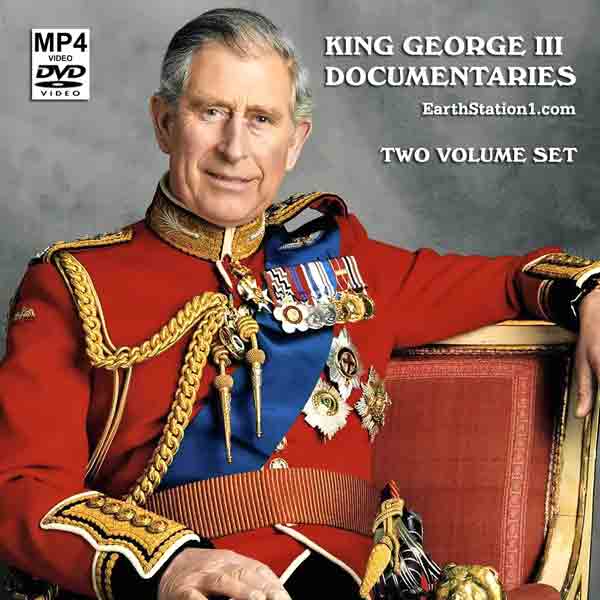
September 8, 2022: The History Of The
United Kingdom: Governments Of The United Kingdom: The Monarchy Of
The United Kingdom (The British Monarchy): Royal Accessions:
Successions To The British Throne: King Charles III of England: --
Charles, Prince Of Wales, becomes King Charles III of England upon
the death of Queen Elizabeth II. Charles III, King Of The United
Kingdom and the 14 other Commonwealth realms, was #born Charles
Philip Arthur George Mountbatten-Windsor on November 14, 1948 at
21:14 (GMT) in Buckingham Palace, London, England, the first
grandchild of King George VI and Queen Elizabeth, during the reign
of his maternal grandfather, King George VI. After having been the
oldest and longest-serving heir apparent in British history, and
the longest-serving Prince Of Wales (1958-2022), he became the
oldest person to accede to the British throne following the death
of his mother, Elizabeth II, on September 8, 2022. He was educated
at Cheam and Gordonstoun schools, which his father, Prince Philip,
Duke of Edinburgh, had attended as a child, as well as the
Timbertop campus of Geelong Grammar School in Victoria, Australia.
After earning a Bachelor of Arts degree from the University of
Cambridge, Charles served in the Royal Air Force and Royal Navy
from 1971 to 1976. In 1981, he married Lady Diana Spencer and they
had two sons: Prince William (b. 1982) and Prince Harry (b. 1984).
In 1996, the couple divorced following well-publicised
extramarital affairs by both parties. Diana was killed in a car
crash in Paris the following year. In 2005, Charles married
long-time partner Camilla Parker Bowles. As Prince Of Wales,
Charles undertakes official duties on behalf of the Queen and the
Commonwealth realms. Charles founded The Prince's Trust in 1976,
sponsors The Prince's Charities, and is a patron, president and a
member of over 400 other charities and organisations. As an
environmentalist, he raises awareness of organic farming and
climate change which has earned him awards and recognition from
environmental groups. His support for alternative medicine,
including homeopathy, has been criticised by some in the medical
community and his views on the role of architecture in society and
the conservation of historic buildings have received considerable
attention from British architects and design critics. Since 1993,
Charles has worked on the creation of Poundbury, an experimental
new town based on his preferences. He is also an author and
co-author of a number of books. On Sale Until Midnight Tonight PT!
https://store.earthstation1.com/king-charles-iii-documentaries-2-volume-mp4-or-dvd-set.html
Today's
EarthStation1.com 15% (Or More!) Off Commemorative Memorial Title:
Norman Rockwell: An American Portrait DVD, Video Download, USB
Drive
Today, September 8, 2026
September 8, 1954: #BOTD: #HBD! Ruby
Bridges, African American civil rights activist, the first African
American child to desegregate the all-white William Frantz
Elementary School in Louisiana during the New Orleans school
desegregation crisis on November 14, 1960, is #born Ruby Nell
Bridges Hall in Tylertown, Mississippi. She is the subject of a
1964 painting, The Problem We All Live With by Norman Rockwell.
Now Ruby Bridges Hall, she has lived her life in New Orleans with
her husband, Malcolm Hall, and their four sons. After graduating
from a desegregated high school, she worked as a travel agent for
15 years and later became a full-time parent. She is now chair of
the Ruby Bridges Foundation, which she formed in 1999 to promote
"the values of tolerance, respect, and appreciation of all
differences". Describing the mission of the group, she says,
"racism is a grown-up disease and we must stop using our
children to spread it." Bridges is the subject of the Lori
McKenna song "Ruby's Shoes". Her childhood struggle at
William Frantz Elementary School was portrayed in the 1998
made-for-TV movie Ruby Bridges. The New Orleans School
Desegregation crisis was a period of intense public resistance in
New Orleans following the 1954 U.S. Supreme Court ruling in Brown
v. Board of Education that racial segregation of public schools
was unconstitutional. The conflict peaked in 1960, when U.S.
Circuit Judge J. Skelly Wright ordered that desegregation in New
Orleans begin on November 14 of that year. On November 14, 1960,
two New Orleans elementary schools began desegregation. Leona
Tate, Tessie Provost, and Gail Etienne, who became known as the
McDonogh Three, joined McDonogh 19 Elementary School, while Ruby
Bridges joined William Frantz Elementary School. All four
6-year-old girls were met with death threats, racial slurs, and
taunts. Widespread boycotts began immediately, and by the end of
the day, few white children remained at either school. On November
16, a race riot broke out in front of a meeting of the Orleans
Parish School Board. Following the riot, United States Marshals
began accompanying the four girls to their respective schools,
while death threats against the children continued. During the
next few days, other white parents began returning their children
to school. It took ten more years for the New Orleans public
schools to fully integrate. In September 1962, the Catholic
schools of Orleans Parish were also integrated. On Sale Until
Midnight Tonight PT!
https://store.earthstation1.com/norman-rockwell-an-american-portrait-dvd.html
Today's
EarthStation1.com #OnThisDay Commemorative Memorial Title: Super
Sense Animal Perception/Plant Adaptation TV Series DVD, MP4, USB
Today, September 8, 2026 September 8: National Dog Walker
Appreciation Day: -- This is a day dedicated to the recognition
and appreciation of dog walkers and the heroes that they are.
Regardless of the day or weather, they are always there to let our
pups out and make our lives easier. They work hard to ensure our
pets are kept safe, clean, and happy. So why not take a day to
appreciate their dedication and kindness to our furry friends?
After all, they also deserve some kindness for all that they do.
According to Swedish geneticist, Pontus Skoglund, canine
domestication first occurred about 27,000 - 40,000 years ago. It
is believed that feral wolves were initially drawn to human
settlements to scavenge for leftover food. Over time, they began
to travel with nomads and a type of natural selection for
domestication came into being. As per studies, China, the Middle
East, and Europe are among the regions where the domestication of
modern-day dogs first occurred. Since then, dogs have made a place
for themselves in society and our hearts unlike any other. They
are our furry friends, emotional support, protectors, and even
family members. For all the love and joy they bring to our lives,
they require care and attention in return. When nature calls, they
need to be let out of the house to handle their business. They
need to be taken out on frequent walks to get fresh air to
exercise, and a little playtime in nature. While they have set
schedules in the morning and evening for the same, it can be
challenging for working fur parents to take them on walks. This is
where dog walkers come to save the day. Picking up poop is just
one aspect of a dog walker's work, and it's also the most basic.
Everyone, however, has a tale about the dog walker who hurried
across town to let the dog out when its owner was trapped at work,
or who watered the plants, fed the fish, and kept an eye on the
house, while the family was on vacation. Every day, dog walkers go
above and beyond the call of duty; nonetheless, most people are
unaware of how difficult the work is. Started by Wag!, the
platform that connects pet parents with local dog walkers,
National Dog Walker Appreciation Day provides walkers the
recognition they've long deserved.
https://store.earthstation1.com/super-sense--animal-perception-tv-series-dvd-mp4-download-usb-driv4.html
September 8: National Dog Walker
Appreciation Day: -- This is a day dedicated to the recognition
and appreciation of dog walkers and the heroes that they are.
Regardless of the day or weather, they are always there to let our
pups out and make our lives easier. They work hard to ensure our
pets are kept safe, clean, and happy. So why not take a day to
appreciate their dedication and kindness to our furry friends?
After all, they also deserve some kindness for all that they do.
According to Swedish geneticist, Pontus Skoglund, canine
domestication first occurred about 27,000 - 40,000 years ago. It
is believed that feral wolves were initially drawn to human
settlements to scavenge for leftover food. Over time, they began
to travel with nomads and a type of natural selection for
domestication came into being. As per studies, China, the Middle
East, and Europe are among the regions where the domestication of
modern-day dogs first occurred. Since then, dogs have made a place
for themselves in society and our hearts unlike any other. They
are our furry friends, emotional support, protectors, and even
family members. For all the love and joy they bring to our lives,
they require care and attention in return. When nature calls, they
need to be let out of the house to handle their business. They
need to be taken out on frequent walks to get fresh air to
exercise, and a little playtime in nature. While they have set
schedules in the morning and evening for the same, it can be
challenging for working fur parents to take them on walks. This is
where dog walkers come to save the day. Picking up poop is just
one aspect of a dog walker's work, and it's also the most basic.
Everyone, however, has a tale about the dog walker who hurried
across town to let the dog out when its owner was trapped at work,
or who watered the plants, fed the fish, and kept an eye on the
house, while the family was on vacation. Every day, dog walkers go
above and beyond the call of duty; nonetheless, most people are
unaware of how difficult the work is. Started by Wag!, the
platform that connects pet parents with local dog walkers,
National Dog Walker Appreciation Day provides walkers the
recognition they've long deserved.
https://store.earthstation1.com/super-sense--animal-perception-tv-series-dvd-mp4-download-usb-driv4.html
Today's
EarthStation1.com #OnThisDay Commemorative Memorial Title:
Tennessee Williams' South (1973) DVD, Video Download, USB Flash
Drive
Today, September 8, 2026September 8: National Iguana Awareness
Day: -- This day is the perfect chance to learn more about the
good keeping of your pet iguana. You can learn tips on how to keep
your iguana friendly and healthy, and even master a few grooming
tricks to make it look dashing. Iguanas make for great pets for
those who are cramped for space or don't want to spend a lot of
time looking after a pet. These cold-blooded reptiles can be
amazing and affectionate pets for many decades if they are given
proper care and attention. It's hard to tell how the celebrations
of National Iguana Awareness Day came about, but it is safe to
assume that the day is observed to help pet owners learn more
about how they can take care of their pet iguanas and ensure a
healthy life. This day is celebrated by iguana owners and by
everyone who has a keen interest in these reptiles. Iguanas are
fascinating creatures, they are cold-blooded reptiles with an
amazing active tail, but annoy them a little bit and you might end
up with an awful bite. Iguanas are native to South and Central
America. Iguanas didn't always exist in America, it is believed
that they came to the country on cargo boats. Over the years the
iguana population rapidly multiplied and they are now commonly
seen in the Florida Keys as squirrels in the Midwestern U.S.! Even
though they have existed in America for a long time now, these
cold-blooded colorful reptiles are not safeguarded from hunting or
pet collection. Many Florida residents have taken these iguanas to
their homes and turned them into pets. While the iguana owners may
be well-intentioned, not all new owners of these baby iguanas
realize that a tiny iguana will one day develop scales and grow to
a length of six feet! Iguanas need special care since they have
very specific dietary needs. It is easy to love an iguana and even
introduce young children to it, but taking care of these
cold-blooded colored reptiles is no easy feat.
https://store.earthstation1.com/tennesee-williams39-south-dvd-1973-exclusive-tv-s391973.html
Today's
EarthStation1.com #OnThisDay Commemorative Memorial Title:
Lawrence Of Arabia aka T. E. Lawrence Documentaries DVD, Download,
USB
Today, September 8, 2026September 8, 1933: #DOTD: #RIP: Faisal I
Of Iraq, King of the Arab Kingdom of Syria, also known as Greater
Syria, in 1920, and King of Iraq from August 23 1921 until his
death, when his son Ghazi of Iraq succeeded him (b. May 20, 1885)
#dies of a heart attack in Bern, Switzerland. aged 48 years.
Faisal was succeeded on the throne by his eldest son, Ghazi. He is
buried at The Iraqi Royal Cemetery, The Royal Mausoleum Adhamiyah,
in Baghdad, Iraq. A square is named in his honour at the end of
Haifa Street, Baghdad, where an equestrian statue of him stands.
The statue was knocked down following the overthrow of the
monarchy in 1958, but later restored. Faisal I Bin Hussein Bin Ali
Al-Hashemi was born in Mecca, Hejaz Vilayet, Ottoman Empire, the
third son of Hussein Bin Ali, the Grand Sharif of Mecca, who had
proclaimed himself King of the Arab lands in October 1916. Faisal
fostered unity between Sunni and Shiite Muslims to encourage
common loyalty and promote pan-Arabism in the goal of creating an
Arab state that would include Iraq, Syria and the rest of the
Fertile Crescent. While in power, Faisal tried to diversify his
administration by including different ethnic and religious groups
in offices. However, Faisal's attempt at pan-Arab nationalism may
have contributed to the isolation of certain religious groups. On
January 3, 1919, he signed the Faisal-Weizmann Agreement at the
Paris Peace Conference, the meeting of the victorious Allied
Powers following the end of World War I to set the peace terms for
the defeated Central Powers, an agreement cosigned by Zionist
leader Chaim Weizmann, who had negotiated the 1917 Balfour
Declaration with the British Government that supported the
establishment of a "national home for the Jewish people"
in the former Ottoman region of Palestine, on the development of a
Jewish homeland in Palestine known as the Faisal-Weizmann
Agreement. Together with a letter written by T. E. Lawrence in
Faisal's name sent in March 1919 to Felix Frankfurter, the future
SCOTUS judge who was then Judge Advocate General for the US War
Department and a Zionist advocate to the Paris Peace Conference,
it was one of two documents used by the Zionist delegation at the
Peace Conference to argue that the Zionist plans for Palestine had
prior approval of Arabs. The agreement was presented to Faisal in
his room at the Carlton Hotel on 3 January in English, which
Faisal could not read, and its contents were explained to Faisal
by Lawrence as the sole translator. Faisal signed the document in
the same meeting, without consulting his advisors awaiting him in
a separate room, but added a caveat in Arabic next to his
signature, such that Faisal considered the agreement was
conditional on Palestine being within the area of Arab
independence. The Zionist Organization submitted the Agreement to
the Paris Peace Conference without the caveat. Yoav Gelber,
professor of history at the University of Haifa and former
visiting professor at The University of Texas at Austin, described
the document as "of propaganda value only", since it
quickly became clear that Faisal's conditions would not be met.
https://store.earthstation1.com/lawrence-of-arabia-dvd-t-e-lawrence-documentaries.html
Today's
EarthStation1.com #OnThisDay Commemorative Memorial Title: WPIX at
40! (1988) New York City's TV Channel 11 DVD, Download, USB
Today, September 8, 2026September 8, 1977: #DOTD: #RIP: Zero
Mostel, American actor and comedian of stage and screen, best
known for his portrayal of comic characters such as Tevye on stage
in Fiddler On The Roof, Pseudolus on stage and on screen in A
Funny Thing Happened on the Way to the Forum, and Max Bialystock
in the original film version of The Producers (b. February 28,
1915) #dies of an aortic aneurysm in Philadelphia, Pennsylvania,
aged 62. In the last four months of his life, Mostel took on a
nutritionally unsound diet (later described by his friends as a
starvation diet) that reduced his weight from 304 pounds (138 kg)
to 215 pounds (98 kg). During rehearsals for Arnold Wesker's new
play The Merchant (in which Mostel played a reimagined version of
Shakespeare's Shylock) in Philadelphia, he collapsed in his
dressing room and was taken to Thomas Jefferson University
Hospital in Philadelpia, Pennsylvania. He was diagnosed with a
respiratory disorder, and it was believed he was in no danger and
would be released soon. However, on September 8, 1977, Mostel
complained of dizziness and lost consciousness. The attending
physicians were unable to revive him, and he was pronounced dead
that evening. Wesker wrote a book chronicling the out-of-town
tribulations that beset the play and culminated in Zero's death
called The Birth Of Shylock And The Death Of Zero Mostel. In
accordance with his final requests, his family did not stage any
funeral or other memorial service. Mostel was cremated following
his death; the location of his ashes is not publicly known. Zero
Mosel was born Samuel Joel in Brooklyn, New York, to Israel
Mostel, who was of Eastern European Jewish origin, and Cina
"Celia" Druchs, a Polish Jew who was raised in Vienna,
Austria. According to Zero's brother Bill Mostel, their mother
coined the nickname "Zero", noting that if he continued
to do poorly at school, he would amount to a zero. Mostel was a
student of Don Richardson, using an acting technique based on
muscle memory. He was blacklisted during the 1950s, and his
testimony before the House Un-American Activities Committee was
well-publicized. He was an Obie Award and three-time Tony Award
winner. Mostel later starred in the Hollywood Blacklist drama film
The Front (1976) alongside Woody Allen, for which Mostel was
nominated for the British Academy Film Award for Best Supporting
Actor. Mostel was an Obie Award and three-time Tony Award winner.
He is also a member of the American Theater Hall of Fame, inducted
posthumously in 1979.
https://store.earthstation1.com/wpix-at-40-channel-11-nyc-1988-tv-retrospec40111988.html
Today's
EarthStation1.com #OnThisDay Commemorative Memorial Title: Black
Civil Rights Films: African-American History DVD, MP4, USB Stick
Today, September 8, 2026September 8, 1981: #DOTD: #RIP: Roy
Wilkins, African American civil rights leader, journalist and
activist, prominent in the Civil Rights Movement in the United
States from the 1930s to the 1970s, known in later life as the
"Senior Statesman" of the Civil Rights Movement (b.
August 30, 1901) #dies of uremia (kidney failure) in New York
City, New York, eight days after his 80th birthday in New York
City. He is buried at Pinelawn Memorial Park And Arboretum in East
Farmingdale, New York. In 1982, his autobiography Standing Fast:
The Autobiography of Roy Wilkins was published posthumously. Roy
Wilkins was born Roy Ottoway Wilkins in St. Louis, Missouri. The
grandson of a Mississippi slave, he was a prominent activist in
the Civil Rights Movement in the United States from the 1930s to
the 1970s. On April 11, 1955, following the death of NAACP
Executive Secretary Walter White, Roy Wilkins was unanimously
elected Executive Secretary (title later changed to Executive
Director) of The National Association For The Advancement Of
Colored People (NAACP), he and served in this capacity until July
1977. Wilkins participated in the March On Washington (August
1963), which he helped organize, the Selma to Montgomery marches
(1965), and the March Against Fear (1966).
https://store.earthstation1.com/black-civil-rights-films-africanamerican-history-dvd.html
Today's
EarthStation1.com #OnThisDay Commemorative Memorial Title: The
Secret Of The Templars Series + Bonus Title MP4 Video Download DVD
Today, September 8, 2026September 8, 1637: #DOTD: #RIP: Robert
Fludd, also known as Robertus de Fluctibus, prominent English
Paracelsian physician, astrologer, mathematician, scientist,
cosmologist, Qabalist and Rosicrucian apologist occultist, reputed
Grand Master Of The Priory Of Sion, best known for his
compilations of occult philosophy (b. January 17, 1574) #dies in
London, England of unspecified causes, aged 63. He is buried in
Holy Cross Church, Bearsted, a parish church of the Church Of
England in Bearsted, Kent constructed during the 13th, 14th and
15th centuries. Robert Fludd was born at Milgate House, Bearsted,
Kent, England. He had a celebrated exchange of views with Johannes
Kepler concerning the scientific and hermetic approaches to
knowledge. While he followed Paracelsus in his medical views
rather than the ancient authorities, he was also a believer that
real wisdom was to be found in the writings of natural magicians.
His view of these mystical authorities was inclined towards the
great mathematicians, and he believed, like Pythagoras and his
followers, that numbers contained access to great hidden secrets.
Certainty in religion could be discovered only through serious
study of numbers and ratios. This view later brought Fludd into
conflict with Johannes Kepler. Fludd's works are mainly
controversial. In succession he defended the Rosicrucians against
Andreas Libavius, debated with Kepler, and argued against French
natural philosophers.
https://store.earthstation1.com/seofteseboti.html
Today's
EarthStation1.com #OnThisDay Commemorative Memorial Title:
America: The Second Century Documentary Series DVD, Download, USB
Today, September 8, 2026September 8, 1883: Grand Openings: The
History Of Rail Transport (The History Of Railways): The History
Of Rail Transportation In The United States: Transcontinental
Railroads: Transcontinental Railroads In The United States: The
Northern Pacific Railway (Reporting Mark NP): -- The Northern
Pacific Railway is completed in a ceremony at Gold Creek, Montana.
Former president Ulysses S. Grant drove in the final "golden
spike" in an event attended by rail and political luminaries
in western Montana. The Northern Pacific Railway (reporting mark
NP) was a transcontinental railroad that operated across the
northern tier of the western United States, from Minnesota to the
Pacific Northwest. It was approved by Congress in 1864 and given
nearly forty million acres (62,000 sq mi; 160,000 km2) of land
grants, which it used to raise money in Europe through the sale of
bonds to fund construction. Construction began in 1870 and the
main line opened all the way from the Great Lakes to the Pacific.
The railroad had about 6,800 miles (10,900 km) of track and served
a large area, including extensive trackage in the states of Idaho,
Minnesota, Montana, North Dakota, Oregon, Washington, and
Wisconsin. In addition, the NP had an international branch to
Winnipeg, Manitoba, Canada. The main activities were shipping
wheat and other farm products, cattle, timber, and minerals;
bringing in consumer goods, transporting passengers; and selling
land. The Northern Pacific was headquartered in Minnesota, first
in Brainerd, then in Saint Paul. It had a tumultuous financial
history; the NP merged with other lines in 1970 to form the
Burlington Northern Railroad, which became BNSF Railway in 1996,
the largest freight railroad network in North America as of 2018.
https://store.earthstation1.com/america-the-second-century-us-2nd-100-years-history-621006.html
Today's
EarthStation1.com #OnThisDay Commemorative Memorial Title: Art In
The Third Reich TV Series DVD, Video Download, USB Flash Drive
Today, September 8, 2026September 8, 1949: #DOTD: #RIP: Richard
Strauss, German composer and conductor, a leading German composer
of the late Romantic and early modern eras (b. June 11, 1864)
#dies quietly of kidney failure in his sleep aged 85 shortly after
2 PM in Garmisch-Partenkirchen, West Germany. From his death-bed,
typical of his enduring sense of humour, he commented to his
daughter-in-law Alice, "dying is just as I composed it in Tod
Und Verklarung" (German: "Death And Transfiguration").
Georg Solti, who had arranged Strauss's 85th birthday celebration,
also directed an orchestra during Strauss's burial. The conductor
later described how, during the singing of the famous trio from
Rosenkavalier, "each singer broke down in tears and dropped
out of the ensemble, but they recovered themselves and we all
ended together". Strauss's wife, Pauline de Ahna, died eight
months later on May 13 1950 at the age of 88. He is buried at the
Richard Strauss Villa in Garmisch-Partenkirchen, Bavaria, Germany.
Richard Strauss was born Richard Georg Strauss in Munich, Kingdom
of Bavaria, German Confederation. A successor of Richard Wagner
and Franz Liszt, Richard Strauss represents, along with Gustav
Mahler, the late flowering of German Romanticism, in which
pioneering subtleties of orchestration are combined with an
advanced harmonic style. Strauss's compositional output began in
1870 when he was just six years old and lasted until his death
nearly eighty years later. His first tone poem to achieve wide
acclaim was Don Juan, and this was followed by other lauded works
of this kind, including Death and Transfiguration, Till
Eulenspiegel's Merry Pranks, Also sprach Zarathustra, Don Quixote,
Ein Heldenleben, Symphonia Domestica, and An Alpine Symphony. His
first opera to achieve international fame was Salome which used a
libretto by Hedwig Lachmann that was a German translation of the
French play Salome by Oscar Wilde. This was followed by several
critically acclaimed operas with librettist Hugo von Hofmannsthal:
Elektra, Der Rosenkavalier, Ariadne auf Naxos, Die Frau ohne
Schatten, Die agyptische Helena, and Arabella. His last operas,
Daphne, Friedenstag, Die Liebe der Danae and Capriccio used
libretti written by Joseph Gregor, the Viennese theatre historian.
Other well-known works by Strauss include two symphonies, lieder
(especially the Four Last Songs), the Violin Concerto in D minor,
the Horn Concerto No. 1, Horn Concerto No. 2, his Oboe Concerto
and other instrumental works such as Metamorphosen. A prominent
conductor in Western Europe and the Americas, Strauss enjoyed
quasi-celebrity status as his compositions became standards of
orchestral and operatic repertoire. He was chiefly admired for his
interpretations of the works of Liszt, Mozart, and Wagner in
addition to his own works. A conducting disciple of Hans von
Bulow, Strauss began his conducting career as Bulow's assistant
with the Meiningen Court Orchestra in 1883. After Bulow resigned
in 1885, Strauss served as that orchestra's primary conductor for
five months before being appointed to the conducting staff of the
Bavarian State Opera where he worked as third conductor from 1886
to 1889. He then served as principal conductor of the Deutsches
Nationaltheater und Staatskapelle Weimar from 1889 to 1894. In
1894 he made his conducting debut at the Bayreuth Festival,
conducting Wagner's Tannhauser with his wife, soprano Pauline de
Ahna, singing Elisabeth. He then returned to the Bavarian State
Opera, this time as principal conductor, from 1894 to 1898, after
which he was principal conductor of the Berlin State Opera from
1898 to 1913. From 1919 to 1924 he was principal conductor of the
Vienna State Opera, and in 1920 he co-founded the Salzburg
Festival. In addition to these posts, Strauss was a frequent guest
conductor in opera houses and with orchestras internationally. In
1933 Strauss was appointed to two important positions in the
musical life of Nazi Germany: head of the Reichsmusikkammer and
principal conductor of the Bayreuth Festival. The latter role he
accepted after conductor Arturo Toscanini had resigned from the
position in protest against the Nazi Party. These positions have
led some to criticize Strauss for his seeming collaboration with
the Nazis. However, Strauss's daughter-in-law, Alice Grab Strauss
[nee von Hermannsworth], was Jewish and much of his apparent
acquiescence to the Nazi Party was done to save her life and the
lives of her children (his Jewish grandchildren). He was also
apolitical, and took the Reichsmusikkammer post to advance
copyright protections for composers, attempting as well to
preserve performances of works by banned composers such as Mahler
and Felix Mendelssohn. Further, Strauss insisted on using a Jewish
librettist, Stefan Zweig, for his opera Die schweigsame Frau which
ultimately led to his firing from the Reichsmusikkammer and
Bayreuth. His opera Friedenstag, which premiered just before the
outbreak of World War II, was a thinly veiled criticism of the
Nazi Party that attempted to persuade Germans to abandon violence
for peace. Thanks to his influence, his daughter-in-law was placed
under protected house arrest during the war, but despite extensive
efforts he was unable to save dozens of his in-laws from being
killed in Nazi concentration camps. In 1948, a year before his
death, he was cleared of any wrongdoing by a denazification
tribunal in Munich.
https://store.earthstation1.com/art-in-the-third-reich-dvd-2-part-tv-documentary-serie2.html
Today's
EarthStation1.com #OnThisDay Commemorative Memorial Title: DJ
Madness! 1950s-60s-70s Radio Shows DVD, MP3 Download, USB Drive
Today, September 8, 2026September 8, 1999: #DOTD: #RIP: Moondog,
American-German singer-songwriter, composer, musician, drummer,
inventor of several musical instruments, theoretician and poet,
widely recognized as "the Viking of 6th Avenue" by
thousands of passersby and residents in New York City who were not
aware of his musical career (b. May 26, 1916) #dies in Munster,
Germany from heart failure, aged 83. He is buried at The Central
Cemetery, Munster. His tomb was designed by the artist Ernst Fuchs
after his death mask. Moondog was born Louis Thomas Hardin in
Marysville, Kansas. On July 4, 1932, the 16-year-old Hardin found
an object in a field which he did not realise was a dynamite cap.
While he was handling it the explosive detonated in his face and
permanently blinded him. In 1943, Hardin moved to New York, where
he met noted classical music luminaries such as Leonard Bernstein
and Arturo Toscanini, as well as jazz performer-composers such as
Charlie Parker and Benny Goodman, whose upbeat tempos and often
humorous compositions would influence Hardin's later work. Moondog
won a 1954 case in the New York State Supreme Court against disc
jockey Alan Freed, who had branded his radio show, "The
Moondog Rock and Roll Matinee", around the name "Moondog",
using "Moondog's Symphony" (the first record that
Moondog ever cut) as his "calling card". Moondog
believed he would not have won the case had it not been for the
help of musicians such as Benny Goodman and Arturo Toscanini, who
testified that he was a serious composer. Freed had to apologize
and stop using the nickname "Moondog" on air, on the
basis that Hardin was known by the name long before Freed began
using it. Hardin lived in New York City from the late 1940s until
1972, and during this time he could often be found on 6th Avenue,
between 52nd and 55th Streets, wearing a cloak and a horned helmet
sometimes busking or selling music, but often just standing
silently on the sidewalk. Moondog also invented several musical
instruments, including a small triangular-shaped harp known as the
"oo", another which he named the "ooo-ya-tsu",
and a triangular stringed instrument played with a bow that he
called the "hus" (after the Norwegian, "hus",
meaning "house"). Perhaps his best known creation is the
"trimba", a triangular percussion instrument that the
composer invented in the late 1940s. The original Trimba is still
played today by Moondog's friend Stefan Lakatos, a Swedish
percussionist, to whom Moondog also explained the methods for
building such an instrument. Along with his passion for Nordic
culture, Moondog had an idealised view of Germany ("The Holy
Land with the Holy River" - the Rhine), where he settled in
1974. Moondog revisited the United States briefly in 1989, for a
tribute at the New Music America Festival in Brooklyn, in which
festival director Yale Evelev asked him to conduct the Brooklyn
Philharmonic Chamber Orchestra, stimulating a renewed interest in
his music. Eventually, a young German student named Ilona Goebel
(later known as Ilona Sommer) helped Moondog set up the primary
holding company for his artistic endeavorsand hosted him, first in
Oer-Erkenschwick, and later on in Munster in Westphalia. Moondog
lived with Sommer's family and they spent time together in
Munster. During that period Moondog created hundreds of
compositions which were transferred from Braille to sheet music by
Sommer. Moondog spent the remainder of his life in Germany. On
September 8, 1999 he died in Munster from heart failure. He is
buried at the Central Cemetery Munster. His tomb was designed by
the artist Ernst Fuchs after the death mask. He recorded many
albums, and toured both in the U.S. and in Europe-France, Germany
and Sweden. Moondog's music from the 1940s and 1950s is said to
have been a strong influence on many early minimalist composers.
Philip Glass has written that he and Steve Reich took Moondog's
work "very seriously and understood and appreciated it much
more than what we were exposed to at Juilliard". In July 1956
the British jazz composer and musician Kenny Graham recorded the
album "Moondog and Suncat Suites" with a thirteen-piece
band featuring such notable performers as Stan Tracey and Phil
Seamen. "Moondog" featured Graham's arrangements of ten
Moondog compositions, whereas "Suncat Suite" consisted
of a sequence of six of Graham's own compositions inspired by
Moondog. HMV issued the original vinyl album in 1957, and Trunk
Records reissued it on CD in 2010. Moondog inspired other
musicians with several songs dedicated to him. These include
"Moondog" on Pentangle's 1968 album Sweet Child and
"Spear for Moondog" (parts I and II) by jazz organist
Jimmy McGriff on his 1968 Electric Funk album. Glam rock icon Marc
Bolan and T. Rex made reference to him in the song "Rabbit
Fighter" with the line "Moondog's just a prophet to the
end_". The English pop group Prefab Sprout included the song
"Moondog" on their album Jordan: The Comeback released
in 1990. Big Brother and the Holding Company featuring Janis
Joplin covered his song "All Is Loneliness" on their
1967 self-titled album. The song was also covered by Antony and
the Johnsons during their 2005 tour. Mr. Scruff's single "Get
a Move On" from his album Keep It Unreal is structured around
samples from "Bird's Lament". New York band The Insect
Trust play a cover of Moondog's song "Be a Hobo" on
their album Hoboken Saturday Night. The track "Stamping
Ground", with its odd preamble of Moondog reciting one of his
epigrams, was featured on the sampler double album Fill Your Head
with Rock (CBS, 1970). Canadian composer and producer Daniel
Lanois included a track called "Moondog" on his
album/video-documentary Here Is What Is. Between 1970 and 1980 a
blind bearded mystic called "Moondog" appeared as the
title character in a four issue series of Underground comix
written and illustrated by George Metzger. Disc jockey Rex Doane
has used elements of Moondogs Symphony as his standard audio bed
and theme for his WFMU radio show Fool's Paradise.
https://store.earthstation1.com/dj-radio-airchecks-mp3-dvd-1950s60s70s-dis319506070.html
Today's
EarthStation1.com #OnThisDay Commemorative Memorial Title: It Was
Twenty Years Ago Today: 1967 & Sgt. Pepper DVD MP4 USB Drive
Today, September 8, 2026September 8, 1997: #DOTD: #RIP: Derek
Taylor, English journalist, writer, publicist and record producer,
best known for his role as press officer to the Beatles in 1964
and then from 1968 to 1970, one of several associates to earn the
moniker "the Fifth Beatle" (b. May 7, 1932) #dies of
throat cancer at his home in Sudbury, Suffolk, aged 65. Having
returned to Apple in the early 1990s, he died while he was still
working for Apple, helping to compile the Beatles Anthology book.
His funeral took place in Sudbury, Suffolk on September 12,
attended by family and friends such as Beatle George Harrison,
Neil Aspinall, Michael Palin (who played the character Eric
Manchester based on him in The Rutles mockumentary "All You
Need Is Cash"), Neil Innes and Jools Holland. He is buried in
Sudbury Cemetery, Sudbury, Suffolk, England.Derek Taylor was born
in Wirral, England. Before returning to London to head the
publicity for the Beatles' Apple Corps organisation in 1968, he
worked as the publicist for California-based bands such as the
Byrds, the Beach Boys and the Mamas and the Papas. Taylor was
known for his forward-thinking and extravagant promotional
campaigns, exemplified in taglines such as "The Beatles Are
Coming" and "Brian Wilson Is a Genius". He was
equally dedicated to the 1967 Summer of Love ethos and helped
stage that year's Monterey Pop Festival. Taylor started his career
as a local journalist on the Wirral, now part of Merseyside, aged
17 working for the Hoylake and West Kirby Advertiser followed by
the Liverpool Daily Post and Echo. He then became a North
England-based writer for national British newspapers that included
the News Chronicle, the Sunday Dispatch and the Sunday Express. He
also served as a regular columnist and theatre critic for the
Daily Express from 1952. During the 1970s, Taylor worked for
Warner Bros. Records and then HandMade Films. The term "pocket
symphony" is generally attributed to Taylor for his
description of the Beach Boys' 1966 single "Good Vibrations".
A trusted confidant of the Beatles, Taylor remained particularly
close to George Harrison long after the band's break-up and
maintained a friendship with John Lennon until the latter's death
in 1980. In addition to working as editor on Harrison's 1980
autobiography, I, Me, Mine, Taylor authored books such as As Time
Goes By, The Making of Raiders of The Lost Ark, Fifty Years Adrift
(In An Open Necked Shirt) and It Was Twenty Years Ago Today.
https://store.earthstation1.com/it-was-20-years-ago-today-1967-and-sgt-pepp201967.html
Today's
EarthStation1.com #OnThisDay Commemorative Memorial Title:
Elizabeth R: A Year In The Life Of The Queen 1992 DVD, MP4, USB
Drive
Today, September 8, 2026September 8, 2022: #DOTD: #RIP: Elizabeth
II (Elizabeth Alexandra Mary Windsor), Queen of the United Kingdom
and the Commonwealth realms until her death (b. April 21, 1926)
#dies peacefully at 15:10 BST at Balmoral Castle, Aberdeenshire,
Scotland at the age of 96, with two of her children, Charles and
Anne, by her side, the first monarch to die in Scotland since
James V in 1542; her death certificate recorded her cause of death
as "old age". Her death was announced to the public at
18:30. She is buried at St. George's Chapel, Windsor. Elizabeth's
reign of 70 years and 214 days was the longest of any British
monarch. She was succeeded by her eldest son, Charles III.
Elizabeth's death set in motion the most recent version of
Operation London Bridge, a funeral plan first devised in the
1960s, and Operation Unicorn, the plan for the Queen's death in
Scotland. Elizabeth's coffin lay at rest in St Giles' Cathedral in
Edinburgh from 12 to 13 September, after which it was flown to
London, where it lay in state in Westminster Hall from 14 to 19
September. An estimated 33,000 people filed past the Queen's
coffin in Edinburgh, and approximately 250,000 people queued to
pay their respects in London. The United Kingdom observed a
national mourning period of 10 days. Elizabeth's state funeral on
19 September was the first held in Britain since Winston
Churchill's in 1965. A funeral service was held at Westminster
Abbey, followed by a procession to Wellington Arch which featured
around 3,000 military personnel and was watched by approximately
one million people in central London. The state hearse then
transported the Queen's coffin to Windsor, followed by another
procession through Windsor Great Park and a committal service at
St George's Chapel at Windsor Castle. The Queen was interred later
that evening with her husband, Prince Philip, in the King George
VI Memorial Chapel, in a private service attended only by her
closest family. Designated as a public holiday in the UK and
several Commonwealth states, the state funeral included
dignitaries from around the world and featured the largest
security operation ever mounted in the UK. Coverage of the state
funeral was one of the UK's most watched special television
broadcasts, surpassing the wedding of Prince William and Catherine
Middleton, the previous most-watched royal event of the 21st
century. The period of official mourning and the funeral was
estimated to have cost the government 162M PS. Elizabeth II was
born in Mayfair, London, England. She was queen regnant of 32
sovereign states during her lifetime and was head of state of 15
realms at the time of her death. Her reign of 70 years and 214
days was the longest of any British monarch and the longest
verified reign of any female head of state in history. Elizabeth
II was the first child of the Duke and Duchess of York, later King
George VI and Queen Elizabeth, and she was educated privately at
home. Her father acceded to the throne on the abdication of his
brother King Edward VIII in 1936, from which time she was the heir
presumptive. She began to undertake public duties during the
Second World War, serving in the Auxiliary Territorial Service. In
1947, she married Prince Philip, Duke of Edinburgh, a former
prince of Greece and Denmark, with whom she has four children:
Charles, Prince Of Wales; Anne, Princess Royal; Prince Andrew,
Duke of York; and Prince Edward, Earl of Wessex. When her father
died in February 1952, she became head of the Commonwealth and
queen regnant of seven independent Commonwealth countries: the
United Kingdom, Canada, Australia, New Zealand, South Africa,
Pakistan and Ceylon. She has reigned as a constitutional monarch
through major political changes, such as devolution in the United
Kingdom, Canadian patriation, and the decolonisation of Africa.
Between 1956 and 1992, the number of her realms varied as
territories gained independence and realms, including South
Africa, Pakistan, and Ceylon (renamed Sri Lanka), became
republics. Her many historic visits and meetings include a state
visit to the Republic Of Ireland and visits to or from five popes.
Significant events have included her coronation in 1953 and the
celebrations of her Silver, Golden, and Diamond Jubilees in 1977,
2002, and 2012 respectively. In 2017, she became the first British
monarch to reach a Sapphire Jubilee. She was the longest-lived and
longest-reigning British monarch as well as the world's
longest-reigning queen regnant and female head of state, and at
the time of her death was the oldest and longest-reigning current
monarch and the longest-serving current head of state. Elizabeth
had occasionally faced republican sentiments and press criticism
of the royal family, in particular after the breakdown of her
children's marriages, her "annus horribilis" ("horrible
year", an expression used by Queen Elizabeth II in her speech
at London's Guildhall on November 24, 1992 marking the 40th
anniversary of her accession) and the death in 1997 of her former
daughter-in-law Diana, Princess of Wales. However, support for the
monarchy has consistently been and remains high, as does her
personal popularity.
https://store.earthstation1.com/elizabeth-r-a-year-in-the-life-of-the-queen-1992-dvd-mp19924.html
Today's
EarthStation1.com #OnThisDay Commemorative Memorial Title: Triumph
Of The Will (Triumph Des Willens) (1935) DVD, Download, USB
Today, September 8, 2026September 8, 2003: #DOTD: Leni
Riefenstahl, German actress, film director, producer, screenwriter
and propagandist (b. August 22, 1902) #dies aged 101 in her sleep
at around 10:00 pm at her home in Pocking, Germany. After
cremation, her ashes were buried in Munich Waldfriedhof. After her
death, there was a varied response in the obituary pages of
leading publications, although most recognized her technical
breakthroughs in filmmaking. Gisela Jahn, Leni Riefenstahl's
former secretary and sole heir, donated the estate bequeathed to
her to the Prussian Cultural Heritage Foundation. Items included
photographs, films, manuscripts, letters, files, and documents
dating back to the 1920s. Leni Riefenstahl was born Helene Bertha
Amalie Riefenstahl in Berlin, Kingdom of Prussia, German Empire.
In the 1930s, she directed Triumph des Willens ("Triumph of
the Will") and Olympia, resulting in worldwide attention and
acclaim. Both movies are widely considered two of the most
effective, and technically innovative, propaganda films ever made.
Her involvement in Triumph des Willens, however, significantly
damaged her career and reputation after the war. Hitler was in
close collaboration with Riefenstahl during the production of at
least three important Nazi films, and a closer friendship is
claimed to have existed.
https://store.earthstation1.com/triumph-of-the-will-triumph-des-willens-riefenstahl-hitler-dvd.html
Today's
EarthStation1.com #OnThisDay Commemorative Memorial Title: I Don't
Want To Be Remembered As A Chair: The Shakers DVD, MP4, USB
Today, September 8, 2026September 8, 1784: #DOTD: #RIP: Ann Lee,
commonly known as Mother Ann Lee, the founding leader of the
American branch of the United Society Of Believers In Christ's
Second Appearing, better known as The Shakers (b. February 29,
1736) #dies at Watervliet (modern Colonie), New York, having
become frail after suffering attacks by violent mobs. She is
buried in the Shaker cemetery located in the Watervliet Shaker
Historic District. Ann Lee was born in Manchester, England. After
nearly two decades of participation in the original England branch
of The United Society Of Believers In Christ's Second Appearing,
the religious movement that became known as the Shakers, Ann Lee
and a small group of her followers emigrated to New York in 1774.
After several years, they gathered at Niskayuna, renting land from
the Manor of Rensselaerswyck, Albany County, New York (the area
now called Colonie). They worshiped by ecstatic dancing or
"shaking", which resulted in them being dubbed the
Shakers. Ann Lee preached to the public and led the Shaker church
at a time when few women were religious leaders.
https://store.earthstation1.com/i-don39t-want-to-be-remembered-as-a-chair-dvd-last-shake39.html